AUTODYSSEY
The Project Car Field Guide
All stories

The Long Read

The Project Car Field Guide

Budgets double, timelines stretch to years, and every build hits the month where progress stops. A field guide to choosing, funding, and finishing a project car, and to quitting one without losing everything.

By Autodyssey Editorial TeamJuly 30, 2026 7 min read

Introduction

The buyer's guide in this series told you to buy the car that runs, and roughly half of you took that advice as a personal challenge. You want the project, the rolling shell, the engine on a stand, and the winter of skinned knuckles that turns a stranger's neglected car into your car. Good. Somebody has to keep these things alive, and the hobby exists because people like you keep signing up for it.

This field guide covers what the classifieds leave out: what a project costs against what it says it costs, how long the work takes against how long you believe it will take, and the month where progress stops and the tarp goes on. Every experienced restorer you meet has lived each of these, and the difference between the garage that finishes and the garage that becomes long-term storage comes down to decisions made before the first bolt turns.

01 / 09

Project selection

Pick the project by parts supply and community before you pick it by price. A rough Mustang, Beetle, or C10 beats a cleaner example of something rare, because every panel, seal, and bracket you destroy learning has a catalogue number and a reasonable price, and a forum thread already documents your exact mistake. The rare car punishes the same mistake with a three-month search and a fabrication bill.

Buy the most complete car you can find, even when the parts look terrible. A crusty original bumper tells the plater what to make, and a missing bumper tells you nothing except what the reproduction costs, if a reproduction exists. Boxes of disassembled parts sold with a project deserve deep suspicion, since a car someone else took apart carries their abandoned problem along with their labels, or more often without them.

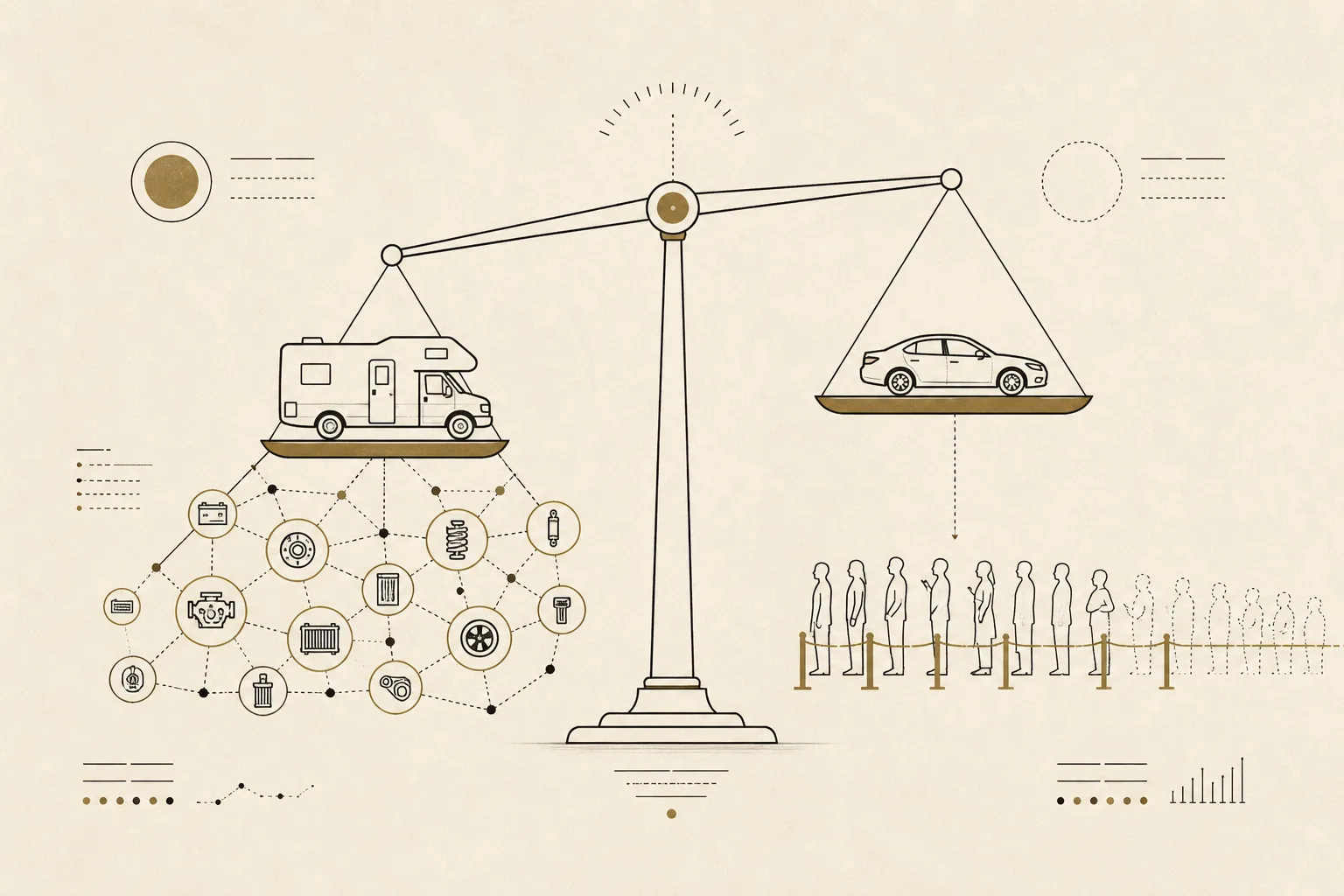
A comparison card weighing a common project car against a rare one across parts supply, documentation, and community depth

The selection filter

The common car forgives a beginner, and the rare car bills them.

Class C · AI-generated

02 / 09

Budget arithmetic

Take your researched estimate, double it, and treat the doubled figure as optimistic, because that rule of thumb has survived generations of restorers for the same reason the pre-purchase inspection exists: the worst costs hide until disassembly. Hardware, consumables, and shipping quietly build a second budget underneath the visible one, and a $14 order of clips arriving every few days rounds up to real money by spring.

Machine work, plating, and upholstery break more budgets than any single part. A rebuildable engine core is a $3,000 to $8,000 machine-shop line before performance parts enter the conversation, chrome plating a bumper can cost more than a reproduction bumper, and a full interior kit with installation reaches thousands on ordinary cars. Price those trades in your area before buying the project, since the hourly work you cannot do yourself sets the true floor of the build.

03 / 09

Timelines

A first frame-off restoration runs three to five years for a working person with a family, and the hobby press has printed that range for decades because it keeps coming true. A driver-quality refresh, where the car stays assembled and systems get rebuilt one at a time, can return a car to the road inside a year, which is one reason this series keeps steering first-timers toward runners.

Plan the work in stages that each end with a running, rolling car. Brakes, fuel, and cooling first, then bodywork one corner at a time, then the interior. The car that still moves under its own power keeps you interested through year two, and the advice from the buyer's guide holds harder here than anywhere: the moment the engine comes out, the calendar starts working against you.

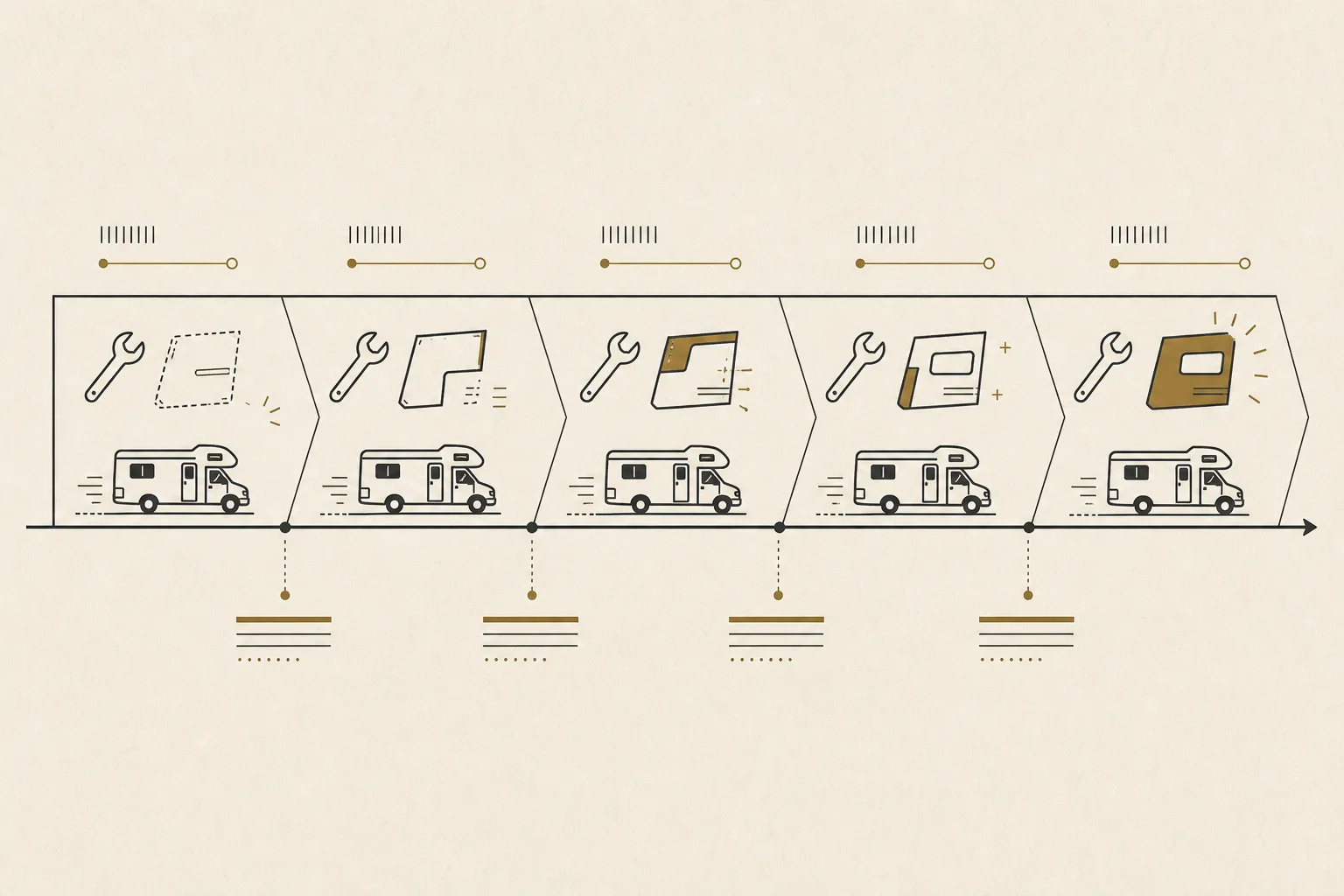
A timeline diagram of a staged restoration with the car returning to running condition at the end of each stage

The staged build

Each stage ends with a car that starts, which is what carries a project through year two.

Class C · AI-generated

04 / 09

The stall

Every project stalls, and the pattern is so consistent you can plan for it. A part goes on back-order from a supplier two time zones away, or the machine shop pushes your block behind a paying fleet job, or the job you found under the job you were doing doubles the scope, and six weeks pass without progress. Motivation follows momentum, so the stall compounds unless you break it deliberately.

The restorers who finish keep a second list of small jobs that need no missing parts: cleaning and labelling hardware, restoring the seat frames, wiring the dash harness on the bench. When the big job stalls, they move to the list, and the project keeps producing finished pieces while the back-order clears. The garage where nothing can proceed until one part arrives is the garage where the tarp goes on.

05 / 09

Disassembly discipline

Photograph everything before and during teardown, from every angle, including the parts you are sure you will remember, because two years from now you will not remember and the photographs will be the only assembly manual that matches your specific car. Factory manuals show the design, and your photos show the reality, including the previous owner's creative repairs you will otherwise reinstall.

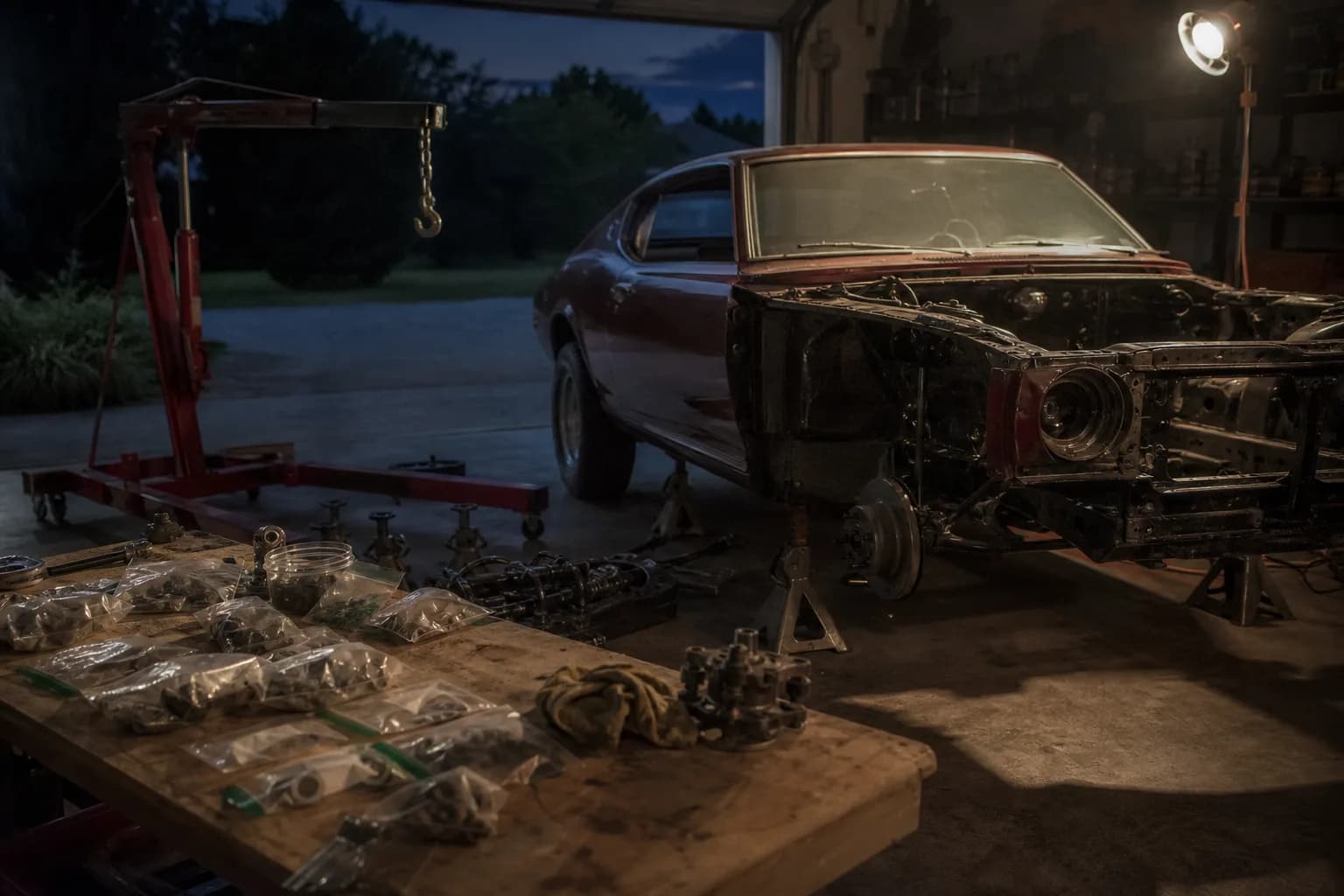
Bag and label every fastener by assembly, and store the bags with the parts they hold together. Zip-top bags, a paint marker, and labeled bins cost under a hundred dollars and pay for themselves the first weekend of reassembly, since a restoration is a ten-thousand-piece puzzle and disassembly is the one chance to keep the pieces sorted.

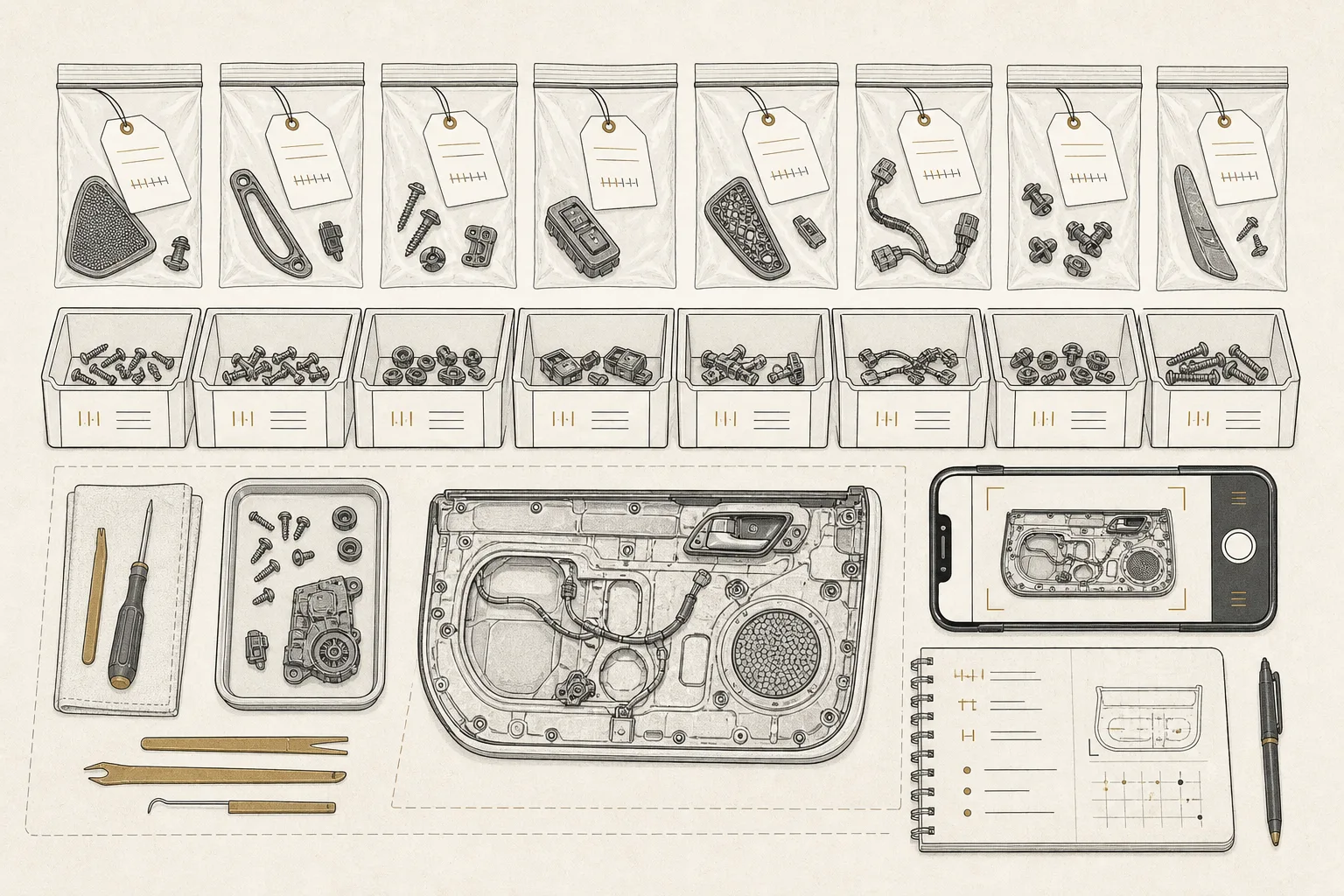
A teardown bench with labelled hardware bags, numbered bins, and a phone photographing a partly stripped door

The teardown record

The photographs and labelled bags become the only assembly manual that matches this car.

Class C · AI-generated

06 / 09

The exit

Know what quitting costs before you start, because an unfinished project sells for less than the sum of its parts and far less than the money invested. The market prices a box-of-parts car below the same car untouched, since the buyer inherits both the work and the uncertainty about what was done, and every classified section proves the discount weekly.

Selling is still sometimes right. Health, moves, and family rearrange lives, and a project passed to an eager builder beats a project mummifying under a tarp for a decade. Take the loss, hand over the photographs and the ledger, and buy the running car this series recommended in the first place, because the record you kept is the one part of the project that transfers at full value.

Start your project ledger in the Vault

07 / 09

Next in this series

The series continues with what makes a great classic, on the traits that separate a car people keep for 30 years from a car people flip in 8 months, and closes with the collectibles worth watching.

08 / 09

Sources

Hagerty Media on restoration cost and timeline patterns and on unfinished-project resale; hobby-press restoration guidance from Hemmings and Classic Motorsports on budgeting rules of thumb, staged builds, and teardown documentation; machine shop and plating trade pricing via published shop menus.

09 / 09

Frequently asked questions

How much does it cost to restore a classic car?

A driver-quality refresh of a running car commonly lands between $10,000 and $30,000 including outside trades, while a full frame-off restoration regularly passes $50,000 once machine work, plating, paint, and upholstery are counted. The reliable rule is to double your researched estimate.

How long does a classic car restoration take?

A staged, driver-quality refresh can return a car to the road within a year. A first full restoration typically takes three to five years for someone working evenings and weekends, and stalls around back-ordered parts and outside trades are normal.

What is the best first project car?

A common, well-supported model such as a Volkswagen Beetle, Ford Mustang, or Chevrolet C10, bought as complete as possible. Deep parts catalogues and large communities lower the cost of every beginner mistake.

Should I buy a project car that is already disassembled?

Rarely. A disassembled project usually hides the problem that stopped the previous builder, parts go missing, and no photographic record exists of how the car came apart. The discount seldom covers the added risk.

Why do project cars lose money when sold unfinished?

The buyer inherits unknown workmanship, missing parts, and all the remaining labour, so the market prices an unfinished project below an untouched example of the same car. Documentation with photographs and receipts narrows the discount.

How do I keep a restoration from stalling?

Plan the build in stages that each end with a running car, and keep a standing list of bench jobs, such as hardware restoration and harness work, to advance while parts are on back-order. Momentum is the resource that finishes projects.

Tags

project carrestoration budgetrestoration timelineteardownbarn find