AUTODYSSEY
What Makes a Great Classic
All stories

The Long Read

What Makes a Great Classic

Some classics stay with one keeper for 30 years and others get flipped in 8 months, and the difference is visible before purchase: parts supply, mechanical legibility, driving character, significance, community, and the record.

By Autodyssey Editorial TeamJuly 30, 2026 7 min read

Introduction

Some classics stay with one keeper for 30 years, and others move through four owners in as many summers, and the difference is measurable before the money moves. The cars that stay share a set of traits any buyer can check from a driveway, and the cars that churn share the opposite set, which means the outcome you are buying is visible in the classified listing if you know where to look.

This series has already covered how to buy your first classic and how to inspect it. This piece covers a different question, the one that decides whether the car you buy becomes part of your life or part of your storage bill: what the great ones have in common.

01 / 09

Parts supply

A great classic can be kept alive without heroics, and parts supply decides that more than any other trait. The Beetle argument from the buyer's guide generalises across the hobby: cars with production runs in the hundreds of thousands support reproduction industries, and cars built in the hundreds support waiting lists. A Mustang owner orders a fender before lunch, and the owner of a low-volume coupe from a defunct marque commissions one from a metal shaper in another state.

Supply also decides whether the car gets driven. Owners baby a car whose windshield cannot be replaced, and a car that gets babied stops being used, which starts the slow slide toward the tarp that the project-car guide in this series warned about. Abundance gives the keeper permission to put miles on the thing, and miles are what the whole exercise is for.

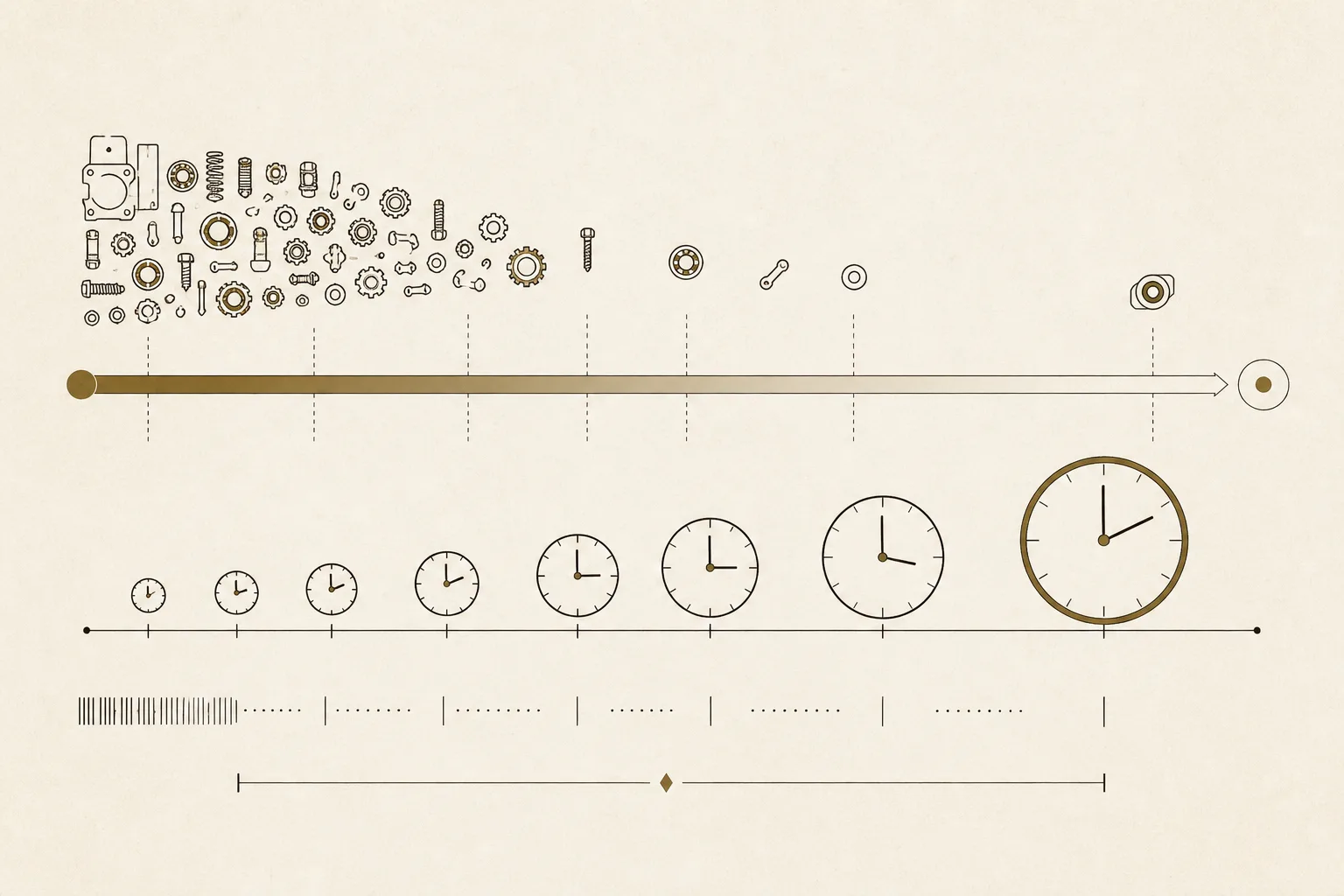
A parts-availability spectrum placing high-production classics beside low-volume rarities with sourcing time marked at each end

The supply spectrum

Production volume decades ago sets the sourcing time a keeper lives with today.

Class C · AI-generated

02 / 09

Mechanical legibility

The great classics explain themselves. A keeper with a manual, a timing light, and a free Saturday can understand the whole car, because every system is visible, mechanical, and repairable with hand tools, and that legibility is the trait modern cars traded away. The relationship between keeper and car depends on the keeper being able to fix it, since a car you cannot touch becomes an appliance with insurance.

Legibility varies more than beginners expect. An air-cooled Volkswagen or a small-block Chevrolet sits at the legible end, while certain complex European machinery of the 1970s and 1980s demands specialist knowledge for routine jobs, and the buyer's guide's advice about calling shops before buying applies doubly here. The car a local mechanic refuses to touch will be maintained by nobody, whatever its badge once meant.

03 / 09

Driving character

A great classic delivers an experience a modern car cannot, and the experience has to survive the third drive. Novelty carries any old car through its first two outings, and character is what remains afterward: steering that reports the road surface, an engine with a voice, a shape you turn around to look at after parking. The cars people keep for decades earn the keeping on ordinary Tuesday drives, and the cars people flip were bought for how they photographed.

Speed matters less than sensation, and the hobby's own market proves it. Slow classics with vivid personalities hold devoted followings, because a car that feels alive at 45 miles per hour gets driven weekly, while a car that only makes sense at triple the speed limit gets driven annually. The test drive advice from the buyer's guide applies with one addition: drive it somewhere boring, since boring roads are where the car will spend its life with you.

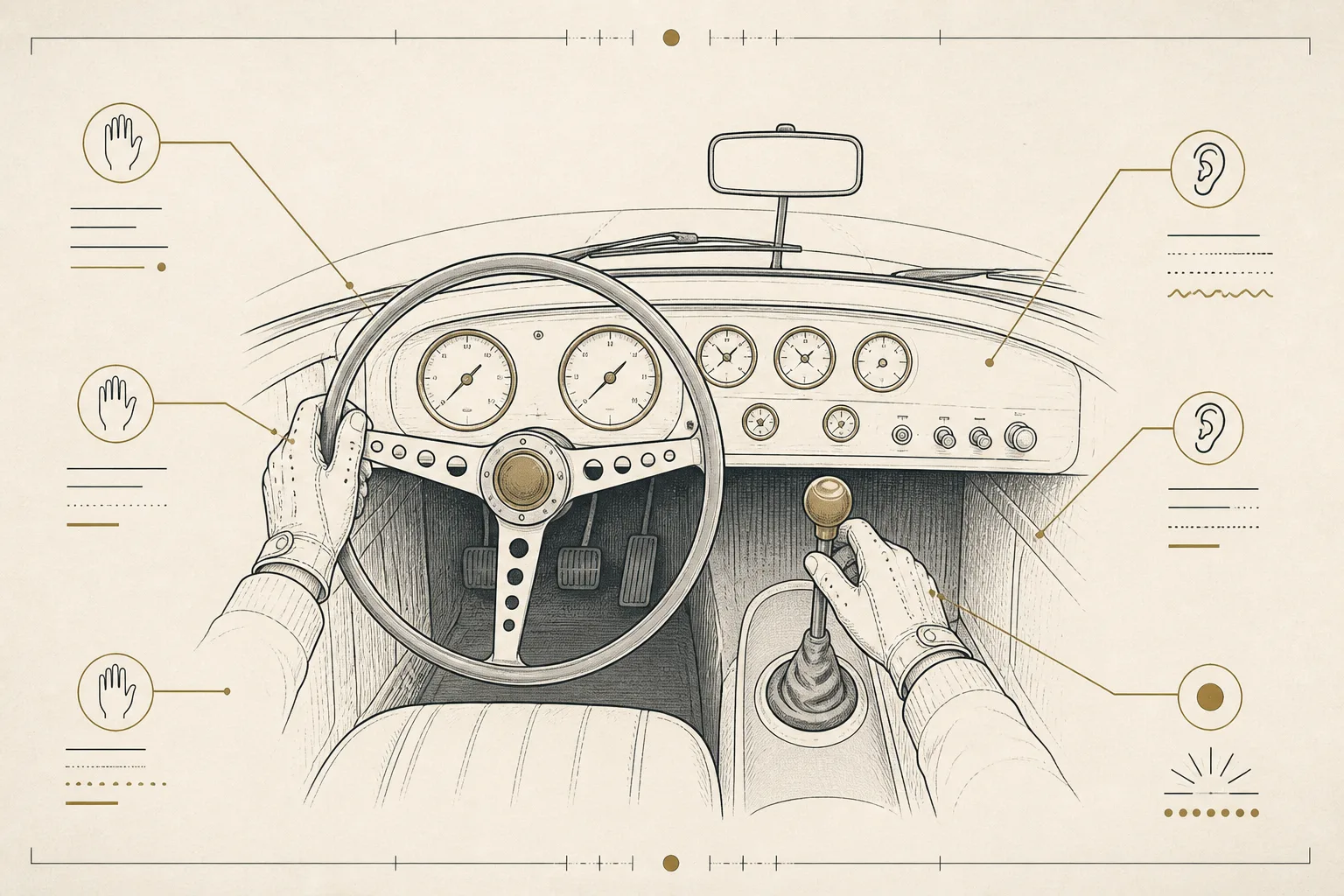
A gauge cluster and thin-rimmed wheel of a driver-focused classic viewed from the seat, controls labelled by what they communicate

The view that keeps a keeper

The cars people hold for decades report everything to the hands and ears.

Class C · AI-generated

04 / 09

Design significance

The great classics mark a moment. Some introduced a form the industry then copied, some closed an era the industry then abandoned, and either kind carries a place in the timeline that survives fashion. The E-Type, the original Mini, the Citroën DS, and the first-generation Mustang all answer the question every keeper eventually gets asked at a fuel pump, which is why this car matters, and a car with an answer keeps its keeper proud through the expensive months.

Significance is distinct from rarity. Production oddities are rare without being important, and their values behave like collectibles rather than like classics, spiking with speculation and sagging without it. The design landmarks hold value across decades because each generation of enthusiasts rediscovers them, which is the pattern the collectibles piece closing this series examines in the data.

05 / 09

Community

The clubs chapter of the buyer's guide undersold its own point, so this piece states it plainly: the community around a model is part of the machine. Registries preserve build records, forums hold thirty years of failure diagnosis, club stores remanufacture the parts no company will, and the technical advisor who has owned nine of them answers email. A great classic comes with all of that attached, and an orphan car comes with silence.

Community also sets the ownership experience your family has. Models with strong club cultures fill calendars with drives, shows, and garage days, and the difference between a car you own and a hobby you belong to usually comes down to whether anyone else nearby owns one.

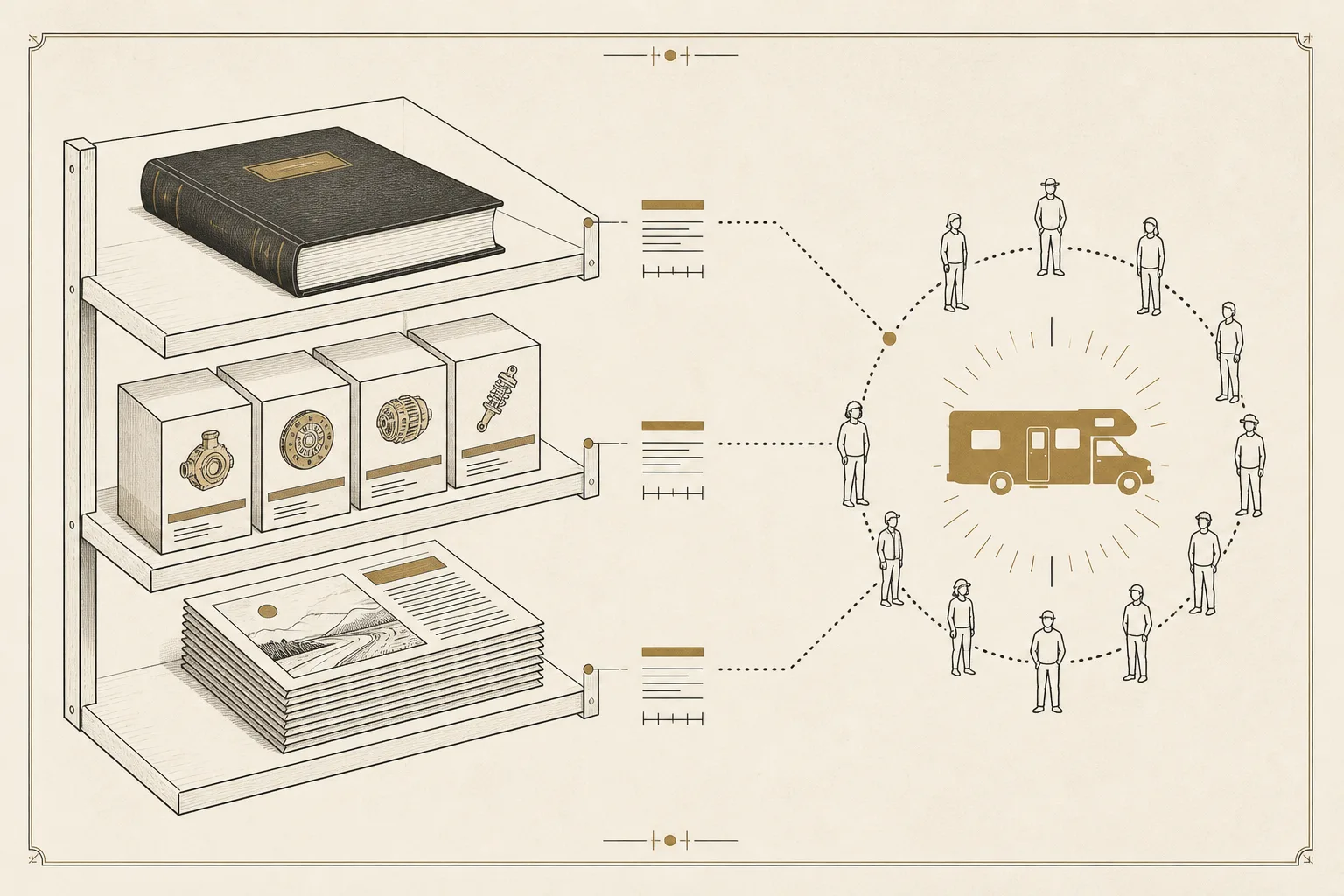
A club registry page beside a shelf of remanufactured parts and a stack of technical newsletters

The machine around the machine

Registries, remanufactured parts, and thirty years of newsletters come with the car or they do not.

Class C · AI-generated

06 / 09

The record

A great classic arrives with its history written down, and the trait compounds every year the keeping continues. The receipts, the ownership chain, and the photographs of past work separate a documented car from an identical undocumented one at sale time, and the market prices that separation in percentages, as the provenance chapter of the buyer's guide laid out. The car that stays 30 years with one keeper usually stays because the keeper became its historian, and historians rarely sell the archive.

The trait is also the only one on this page the keeper controls. Parts supply, legibility, character, significance, and community were fixed decades ago on an assembly line, and the record is built now, one oil change at a time, which is the standing argument for the Vault.

Build your car's record in the Vault

07 / 09

Next in this series

The series closes with the collectibles worth watching, on what is moving in the market now and what the Hagerty data suggests comes next.

08 / 09

Sources

Hagerty Media on ownership tenure, documentation premiums, and model-community effects on value; the buyer's guide and pre-purchase inspection entries earlier in this series; club and registry publications from the marque organisations named; Classic Car Club of America and Antique Automobile Club of America materials on significance and classification.

09 / 09

Frequently asked questions

What makes a classic car a good long-term keeper?

Deep parts supply, mechanical systems an owner can understand and repair, driving character that survives repeated use, recognised design significance, an active community, and a documented history. Cars with those traits stay with keepers for decades, while cars without them change hands quickly.

Does rarity make a classic car more valuable?

Not by itself. Rare cars without design significance or community support behave like speculative collectibles, with values that spike and sag. Historically significant designs hold value across generations because each new wave of enthusiasts rediscovers them.

Why do some classic cars get flipped quickly?

Cars bought for their photographs rather than their driving experience lose their appeal once novelty fades, usually within months. Thin parts supply and weak community support accelerate the exit, since every repair becomes a research project.

Is a slow classic car worth owning?

Yes, when it has character. Cars that feel engaging at ordinary road speeds get driven weekly and keep their owners involved, while cars that only reward illegal speed tend to sit. Regular use is the strongest predictor of long ownership.

How does documentation affect a classic car's value?

A documented history of receipts, ownership records, and photographs commands a measurable premium over an identical undocumented car, and it builds buyer trust at sale time. The record is also the one value trait an owner can still create today.

How important is a car club to ownership?

Substantially. Clubs and registries preserve build records, remanufacture unavailable parts, hold decades of repair knowledge, and supply the events that keep a car in use. Models with strong communities are easier and cheaper to keep on the road.

Tags

great classic carsclassic car valueparts availabilitycar communityprovenance