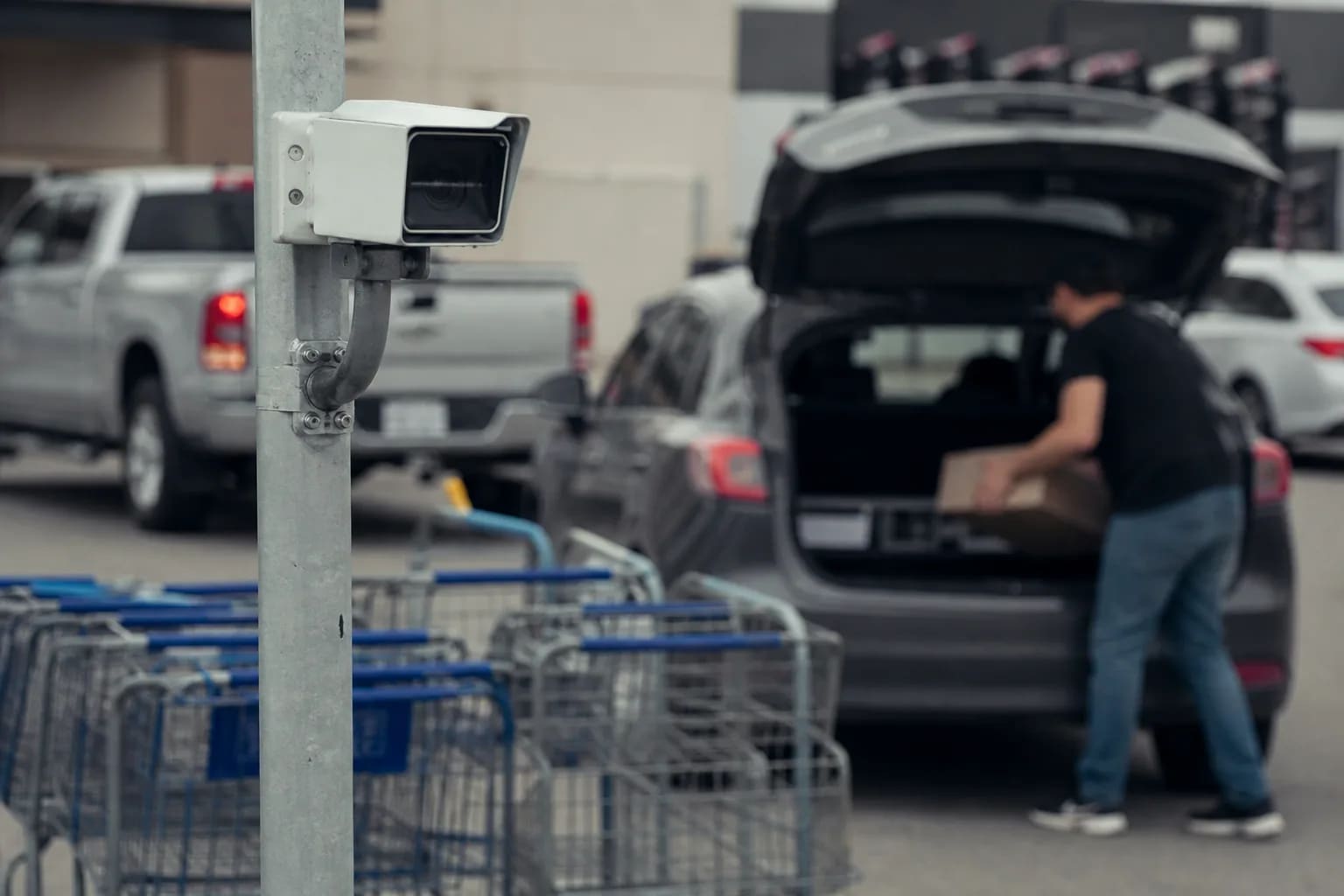
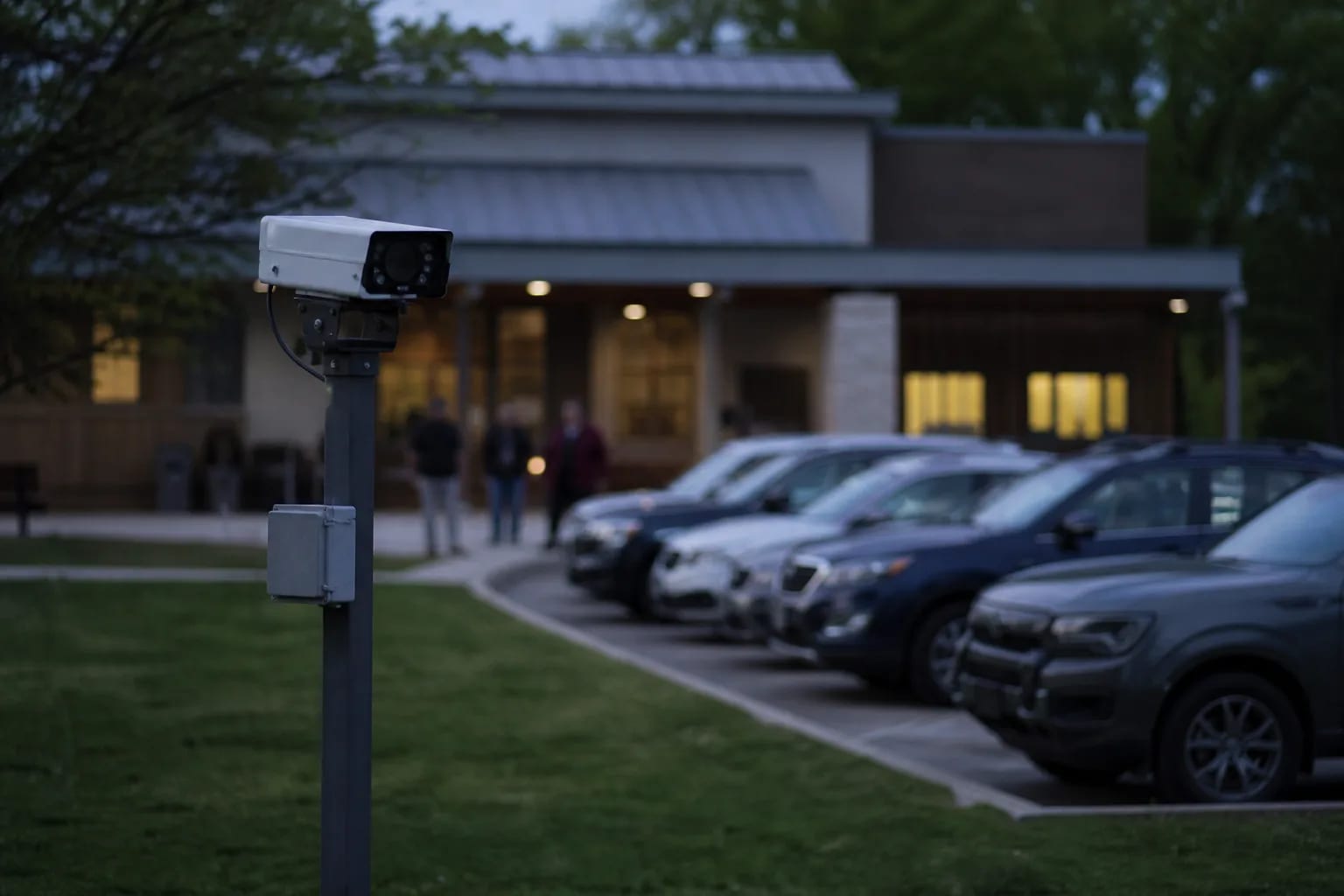
Automated license-plate readers turn an ordinary drive into a searchable event. Flock Safety says its network includes more than 120,000 cameras across 49 states and serves thousands of law-enforcement agencies and communities, a scale that grew from local contracts rather than a national vote.
The camera does not need to know your name to create a useful record. It needs a plate image, a timestamp, a location, and a description of the vehicle. The platform can then compare that record with a vehicle associated with an investigation, or search backward through the vehicles that passed a particular place.
That changes the character of a parking lot. A store entrance becomes a checkpoint with retail landscaping. A neighborhood gate becomes a historical log of who visited. A camera near a home can record the arrival of a relative, a contractor, a former partner, or a friend who thought they were stopping by for coffee. The system does this to every driver in view, because the camera has no way to know who will matter later.
Retailers have joined the same pattern. 404 Media reported that Home Depot and Lowe’s shared data from hundreds of AI-enabled cameras with police, including systems that could identify vehicles and support investigations. A customer arriving for paint supplies does not become a suspect by walking through the door, but the visit can still enter a database built for suspicion.
A routine drive becomes a searchable record
01Camerasees a passing vehicle
→
02Scanreads plate and vehicle details
→
03Recordstores time and location
→
04Searchfinds the trip later
The store can describe the camera as a theft-prevention tool, and a police department can describe it as an investigative aid. Both descriptions may be true. Neither description tells the person in the driver’s seat that the errand has become a data point.