AUTODYSSEY
A classic-car collector’s first week with Tesla Full Self-Driving
All stories

The Long Read

A classic-car collector’s first week with Tesla Full Self-Driving

I rented a Tesla for a work trip to Phoenix and came home reconsidering driving, pleasure, and independence. An editor’s firsthand account.

By AUTODYSSEYNovember 9, 2026 10 min read

Audio edition

Listen to this story

Introduction

I vowed to myself to never drive an electric car, but a recent business trip allowed me the opportunity to experience Tesla's FSD for the first time. My mind is blown.

I’d arrived in Phoenix for work, collected a rental through Turo, and discovered that the car included Full Self-Driving, a feature I hadn’t expected when I booked it.

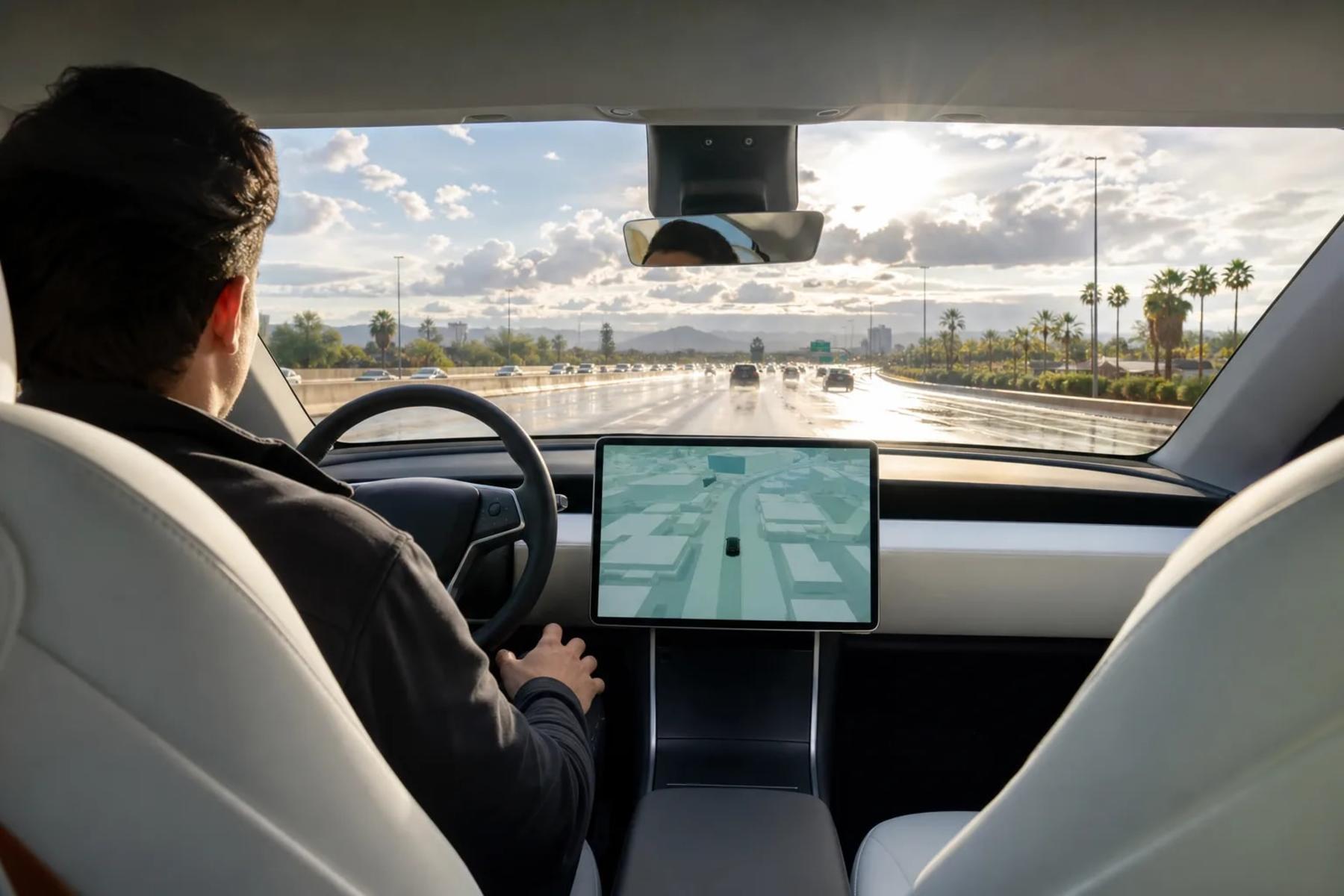
I entered my destination and engaged the system, then made a correction in the parking lot before we continued toward the road. Rain had slowed the traffic, and I remember the drive taking roughly twenty to twenty-five minutes.

I felt unusually comfortable once we reached the highway, which surprised me. I collect classic cars because I enjoy mechanical controls, fewer computers, and the feeling of operating a machine I can understand.

“I always kind of resented Tesla as a limitation” was how I described my starting position. I associated motoring with the ability to leave, choose another road, and keep going without consulting a charging map.

A connected electric car raised questions for me about range, surveillance, and dependence on infrastructure. I wanted a vehicle I could maintain and take somewhere without asking a software company.

The rental challenged those assumptions through ordinary use. I still had work to do, places to reach, and dinner to find, and I began to appreciate the assistance on trips I would have made in any car.
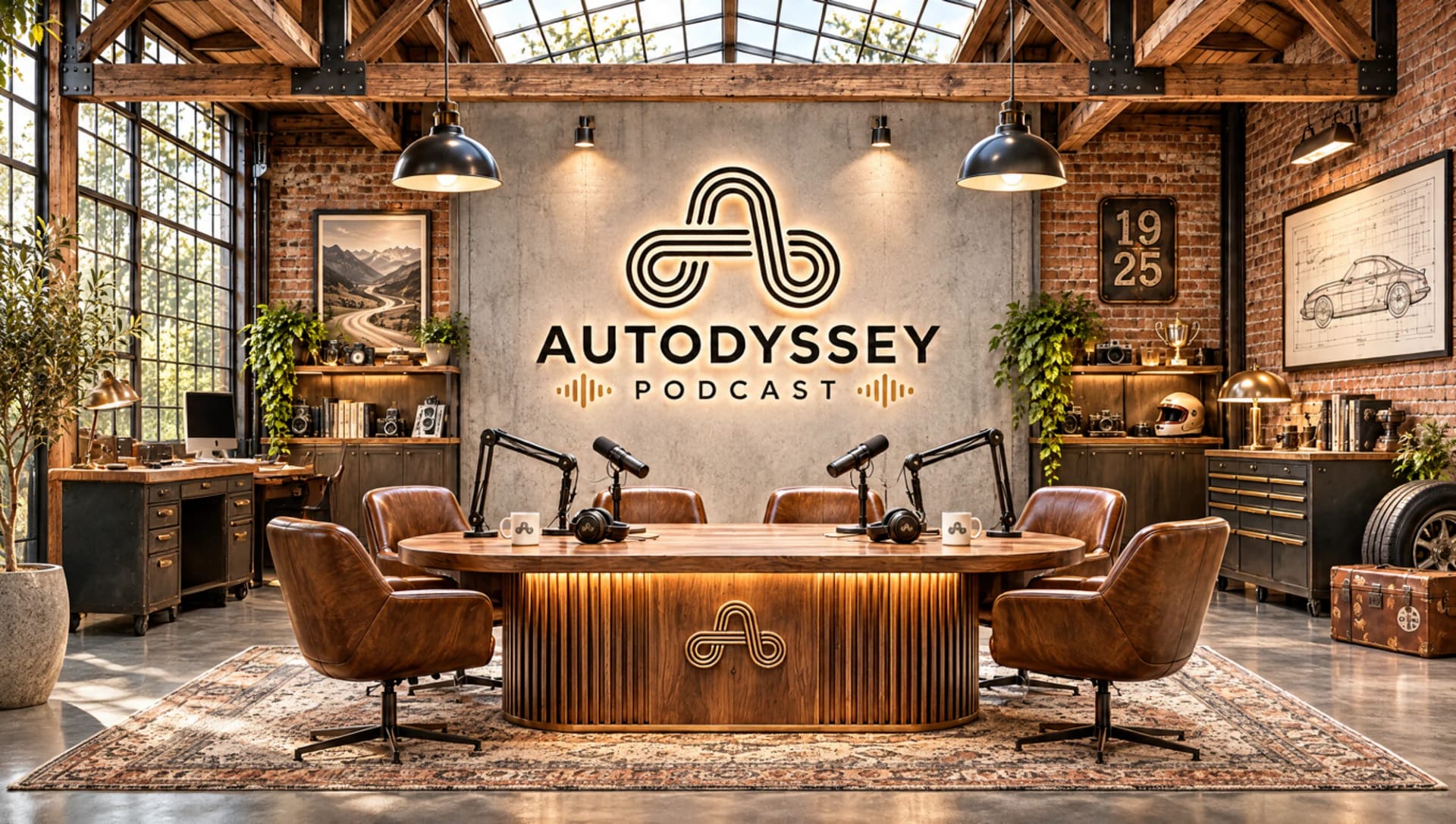
The AUTODYSSEY podcast studio has microphones around a wooden table beneath large skylights.

Podcast studio

01 / 08

The first drive

I visit Phoenix frequently and prefer choosing a specific car through Turo. Earlier rentals had made me curious about electrified vehicles, including an Audi I tried during a trip to Reno, and the Tesla gave me more time to live with a different approach to driving.

I remember the clean dashboard and a central screen that passengers could see as readily as I could. The arrangement made the cabin feel less organized around the driver. I didn’t record the model, so I’m leaving it unnamed rather than guessing from my memory of the interior.

The highway drive impressed me, particularly because I find darkness and rain harder on my vision. I kept paying attention, but I felt safer than I’d expected to feel.

That was my reaction to one drive, and I can’t turn it into a comparative safety claim. Tesla’s product requires a driver who can supervise it and intervene, which the parking lot had already reminded me to do.

Tesla calls the feature Full Self-Driving (Supervised). The company states that its enabled features “do not make the vehicle autonomous.” Its exterior cameras supply the surrounding view; the system described here does not use lidar to map the nearby cars.[1]

That distinction matters when I think about disability, fatigue, or reduced vision. A person who cannot safely take over should not rely on supervised driving assistance to make a trip possible. The independence I imagine for people unable to drive requires a genuinely driverless service operating within its approved conditions.

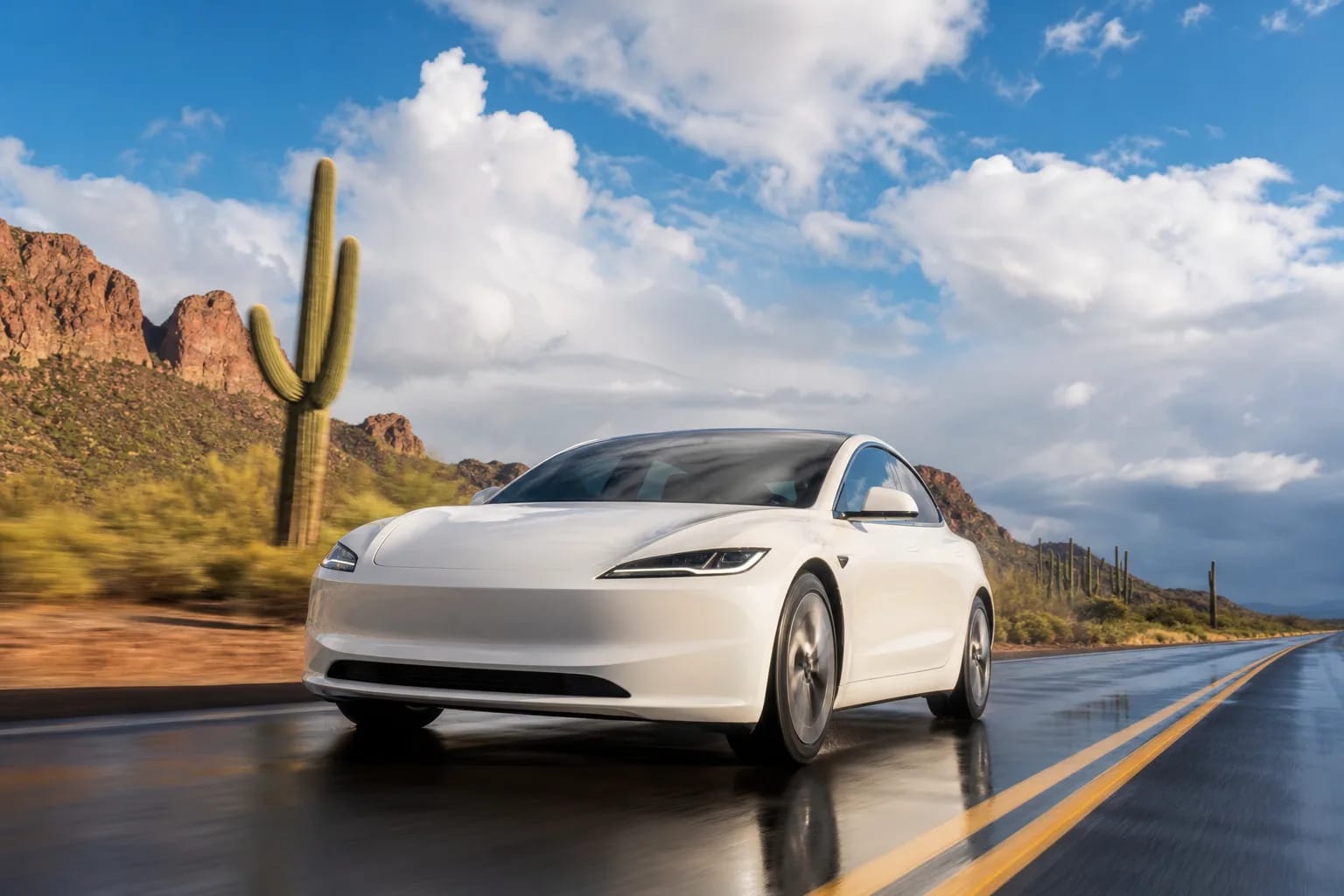
A white electric sedan on a wet desert highway beside saguaro cacti under a bright blue sky

Arizona after the rain

An illustration of the kind of highway driving I did in Phoenix; it does not depict my rental.

Class C · AI-generated

02 / 08

Everyday trips

I used the system repeatedly during the week for work, meals, and the return to my hotel. Those trips gave me a more useful impression than I would have taken away from a demonstration.

I remember wanting food one evening and thinking I would otherwise settle for whatever was easiest to reach. I entered a restaurant’s address, and I recall the car taking me there and parking. I still had to supervise it, but I welcomed the help.

My classic cars give me the pleasure of choosing a road and attending to the machine. A dinner run after a working day asks for something more practical, and I began to appreciate the difference.

Tesla chief executive Elon Musk expressed the broader ambition at the company’s October 2024 robotaxi presentation: “With autonomy, you get your time back.”[2] He was describing an autonomous future, whose passengers could use the ride for something other than driving. A driver supervising today’s assistance system must continue to give the road that time and attention.

I can enjoy driving a classic car on Saturday and welcome a driverless ride to an appointment on Monday, provided the service can make that trip safely. The rental helped me understand why I would want both.

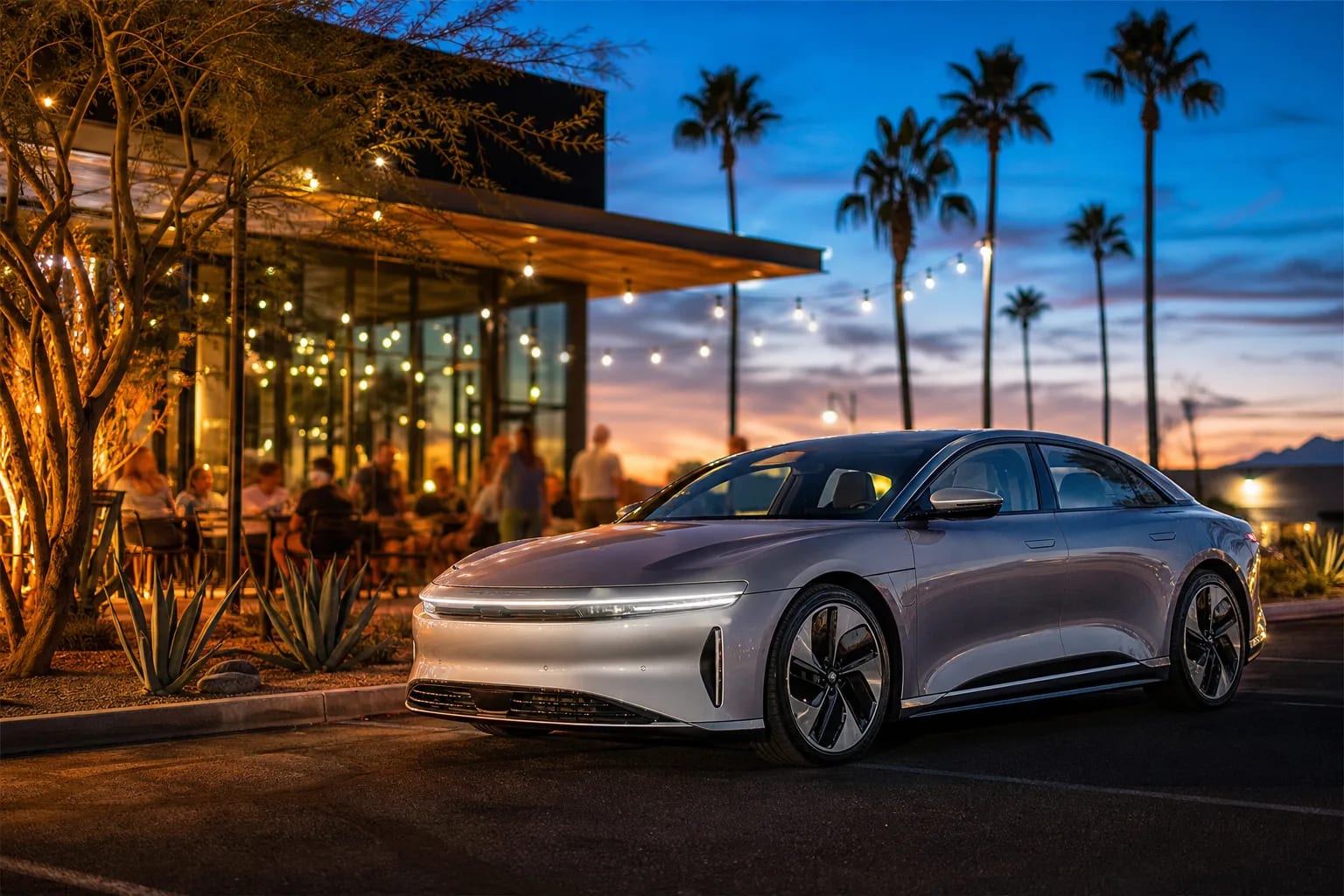
An electric sedan parked outside a lit restaurant patio under palm trees at dusk

The dinner run

An illustration of an evening restaurant trip, when I came to appreciate supervised driving assistance.

Class C · AI-generated

03 / 08

Charging and cabin temperature

Charging had looked like an inconvenience before the rental, but I found that I enjoyed the pause. I remember my stops taking around twenty to thirty minutes.

I noticed the other owners waiting and the businesses around the parking lots, and I started imagining a coffee stand for people who had enough time to leave the car and buy something. I’d arrived worried about charging infrastructure and found myself considering the coffee business.

Those times describe my sessions rather than a promise about anyone else’s charging stop. Starting charge, battery temperature, charger output, and the vehicle all affect the wait; reaching 80 percent does not mean the battery is full.

Remote climate control impressed me more than I’d anticipated. I remember checking the parked car from my phone, seeing an interior temperature of 131 degrees Fahrenheit, and bringing it toward 75 before returning. I also remember running the cooling for an extended period with what appeared to be a modest reduction in charge.

I didn’t independently measure those temperatures or the battery use. They explain my reaction to the rental, and they shouldn’t serve as energy-consumption estimates or a reason to leave a person or animal unattended in a parked car.

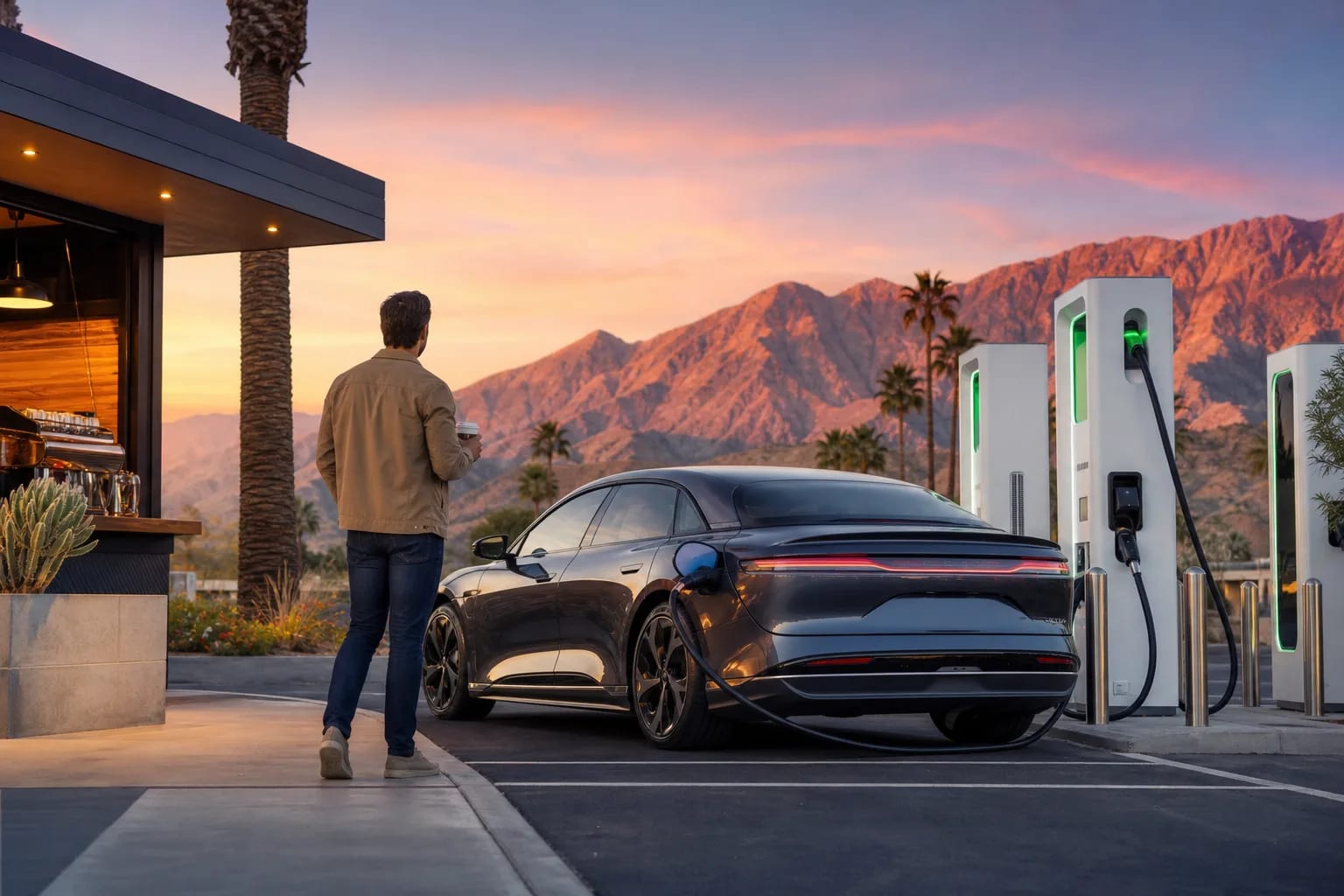
A traveler holding a coffee cup beside an electric sedan at a fast charger, desert mountains behind

Charging stop

An illustration of the pause I came to enjoy between drives; it does not depict my rental.

Class C · AI-generated

04 / 08

Independence after surgery

I kept thinking about my father when I considered what driverless transport might make possible. He faces recovery from hip surgery, and the Ford F-150 he normally drives presents immediate difficulties: getting into the cab and operating the pedals.

We can help him with appointments, but he still wants to decide when to leave, whom to visit, and how long to stay. That includes visiting his wife in memory care, and depending on someone else’s availability changes those decisions.

I want him to be able to arrange a visit himself. I think about older adults continuing to see friends, people with disabilities reaching appointments, and someone recovering from surgery making a short visit without asking a relative to drive.

An accessible service would need to account for the entire trip. A passenger might need help reaching the vehicle, transferring from a wheelchair, securing a mobility device, or finding the entrance at the destination. A touchscreen and automated steering cannot supply all of that assistance.

Driverless vehicles could also appeal to passengers who feel uncomfortable riding alone with a stranger late at night. Removing an unfamiliar driver changes that experience, although passenger safety still depends on reliable support, secure pickup arrangements, and a way to get help when a journey goes wrong.

These are reasons to develop and evaluate accessible driverless services. They do not make a supervised Tesla an appropriate substitute for a driver who cannot operate the pedals or safely respond to an emergency.

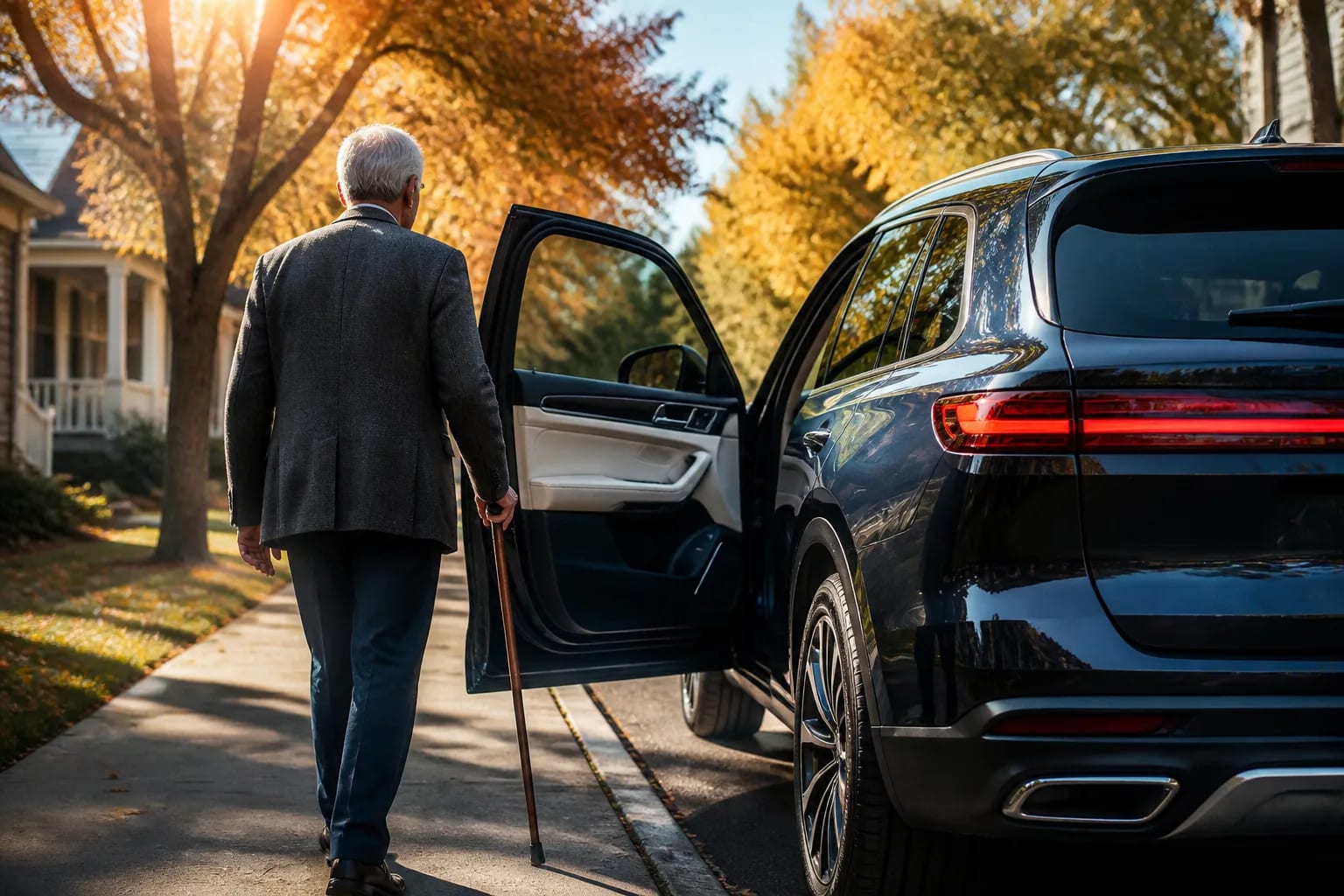
An older man with a cane walking toward the open door of a waiting car on a tree-lined street

A ride on his own schedule

An illustration of the independence a driverless service could offer someone who can no longer work the pedals.

Class C · AI-generated

05 / 08

Safety evidence

Waymo provides evidence worth examining because it operates driverless passenger services, a different system and operating model from the Tesla rental. Its May 2025 research summary covered 56.7 million miles and compared its performance with human-driver benchmarks.[3]

The company reported 85 percent fewer crashes involving suspected serious or worse injuries and 96 percent fewer injury-involving intersection crashes. The research considered crashes regardless of fault, and Waymo acknowledged that the serious-injury result relied on a small number of events because those crashes are rare.

Jonathan Adkins, chief executive officer of the Governors Highway Safety Association, described “Fewer crashes and fewer injuries” as the kind of progress the organization wanted to see, in a statement included with Waymo’s research announcement.[3]

The findings concern Waymo’s system, the roads and conditions studied, and the selected benchmarks. They cannot establish Tesla’s performance or guarantee equivalent results on unfamiliar roads in a Minnesota winter. They do give policymakers evidence to examine beyond a promotional demonstration or one passenger’s experience.

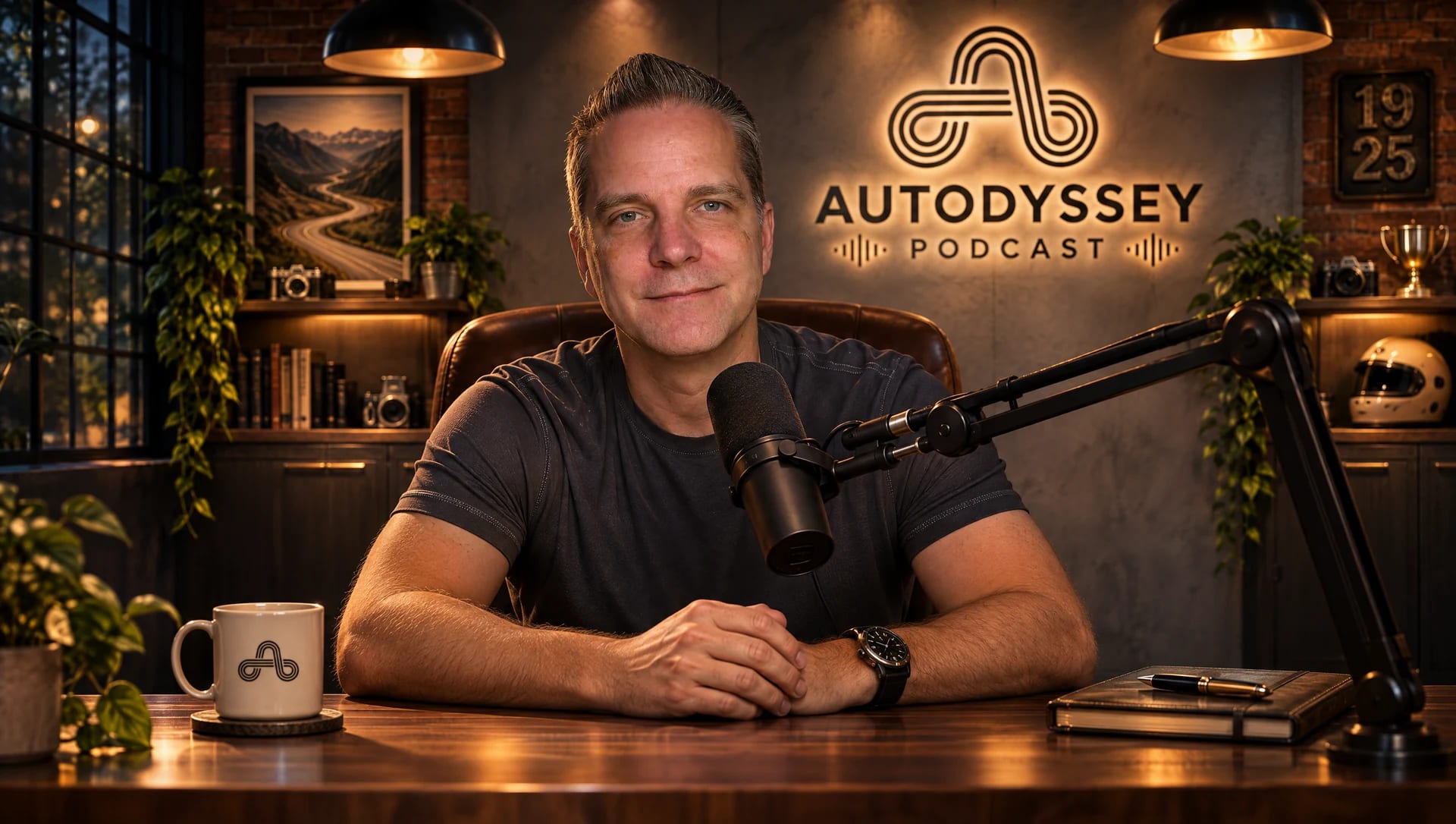
Kraabel sits at a microphone in the AUTODYSSEY podcast studio.

Podcast host

06 / 08

Minneapolis regulation

Minneapolis has already debated how driverless transportation should operate. The City Council adopted an ordinance on October 1, 2026, by a 7–6 vote that would have required a licensed human safety monitor inside commercial autonomous vehicles, with immediate access to driving controls.[4][5]

Mayor Jacob Frey vetoed it on October 2. The council’s legislative record identifies the October 15 outcome as “Veto Sustained,” so the earlier vote should not be described as a human-monitor requirement currently in force.[4]

A later autonomous-vehicle proposal entered the legislative process in October. The city’s record shows that the Business, Housing & Zoning Committee referred it to staff on November 5; that was its recorded status on November 9, 2026.[6]

The debate includes the livelihoods of rideshare drivers as well as passenger access, emergency response, insurance, privacy, and the ability of regulators to hold operators accountable. I favor allowing driverless transportation to develop, and my family’s circumstances explain why I want accessibility to receive serious attention.

Workers affected by a changing industry deserve a credible response, just as passengers deserve evidence that a service can operate safely. Minneapolis has to consider both, including the conditions under which the technology would run and the obligations its operators would accept.

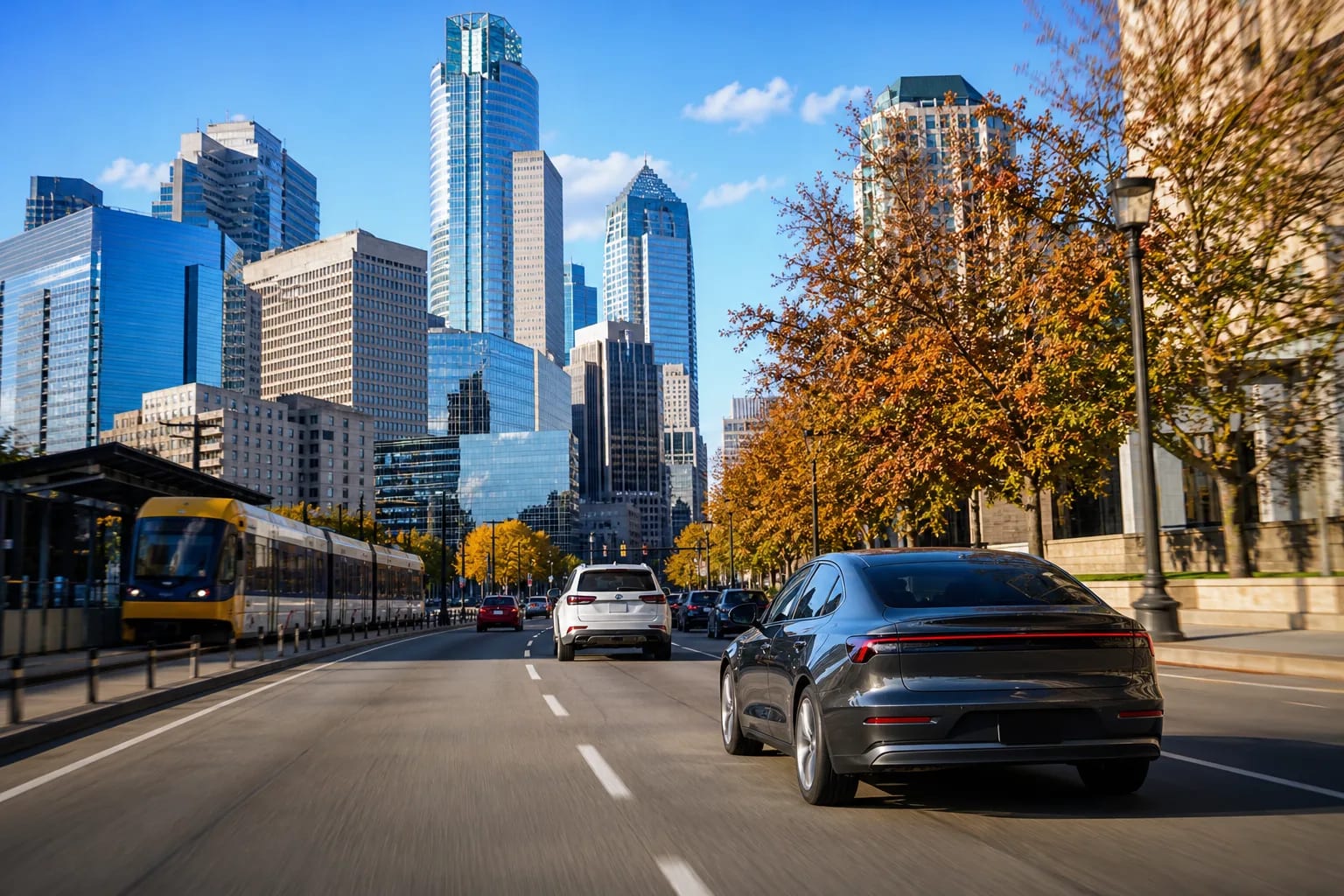
Downtown Minneapolis towers above a busy street with cars and a light-rail train on a bright autumn day

Minneapolis

An illustration of the city where the council and mayor disagreed over human monitors in driverless vehicles.

Class C · AI-generated

07 / 08

Classic cars and driverless transport

I’d already met customers who made room for both approaches through my work restoring and importing vintage Land Rovers. They kept a Tesla beside a Defender and enjoyed the convenience of one alongside the mechanical experience of the other.

I understand that choice more readily after Phoenix. I can keep the cars that make driving rewarding and support transportation that helps people reach the places they need to go.

My earlier concerns about tracking remain. Connected transport does not automatically protect location privacy, prevent mileage collection, or guarantee unrestricted travel. Those protections require decisions about data, contracts, regulation, and who controls access to the service.

I described my reaction afterward as being all in on full self-driving. I mean a future that can deliver safe driverless transport, and I still recognize the supervision required by the car I rented.

My enthusiasm comes with a practical standard. A useful driverless service would let my father arrange a visit to his wife, reach her safely, and return when he was ready. I want him to be able to make that decision himself.

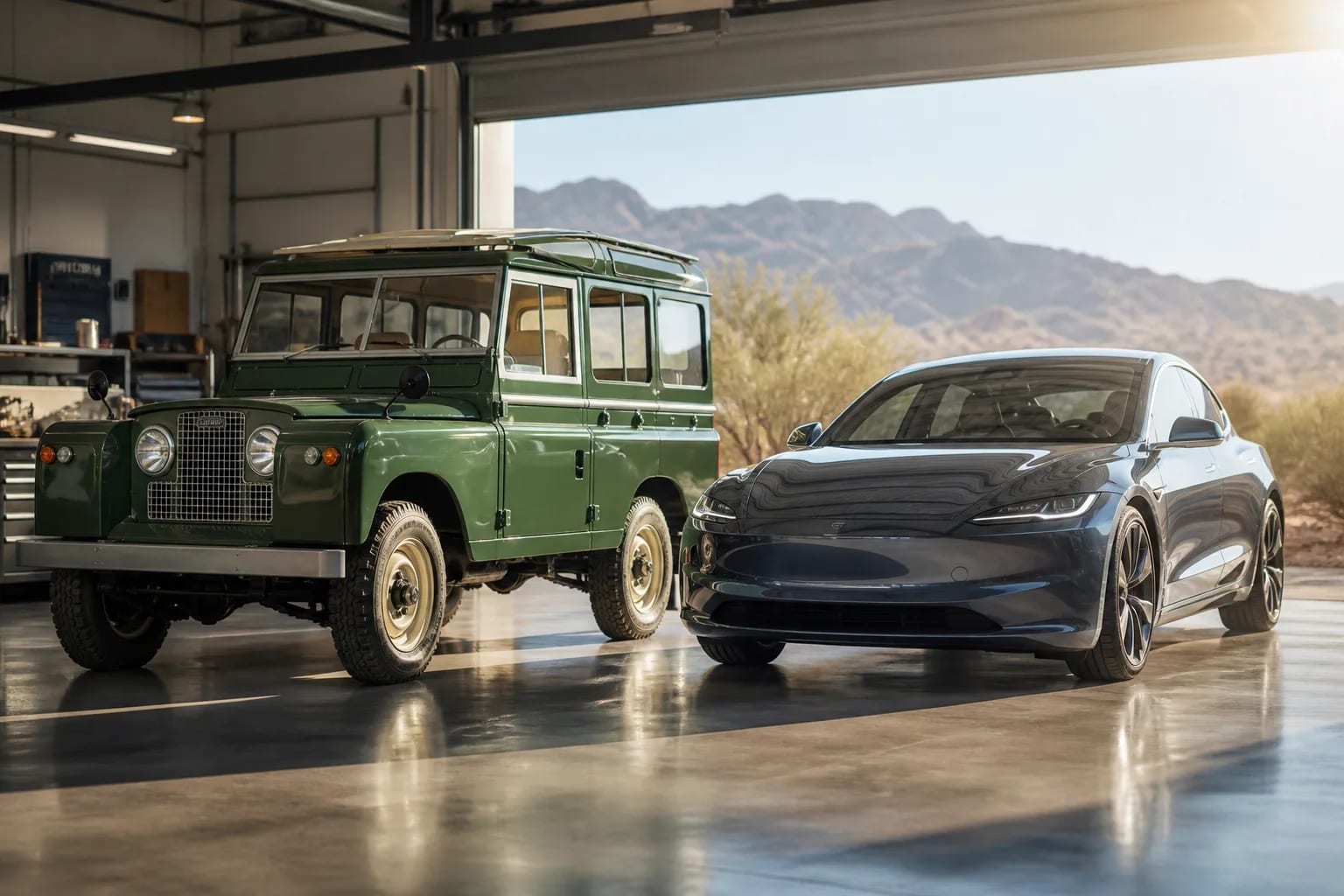
A restored green vintage Land Rover parked beside a modern electric sedan in a bright garage

Classic and electric cars

An illustration of the households I met through my Land Rover work, keeping a mechanical classic beside an electric car.

Class C · AI-generated

08 / 08

Sources

  1. Tesla, Full Self-Driving (Supervised), product description and supervision disclaimer: https://www.tesla.com/fsd
  2. Elon Musk, Tesla chief executive, October 10, 2024, We, Robot presentation. Archived event transcript: https://elonmuskarchive.org/video/we-robot-robotaxi-reveal-2024-10-10 ; contemporaneous Reuters report: https://www.reuters.com/technology/teslas-musk-unveil-robotaxis-amid-fanfare-skepticism-2024-10-10
  3. Waymo, May 1, 2025, research summary and Jonathan Adkins statement: https://waymo.com/blog/2025/05/waymo-making-streets-safer-for-vru/ ; linked research paper: https://www.tandfonline.com/doi/full/10.1080/15389588.2025.2499887
  4. Minneapolis legislative file 2026-00738, including adoption, veto, and sustained-veto history: https://lims.minneapolismn.gov/File/2026-00738
  5. FOX 9, October 2, 2026, ordinance provisions and mayoral interview: https://www.fox9.com/news/minneapolis-mayor-robotaxi-regulation-veto-doesnt-make-sense-oct-2-2026
  6. Minneapolis legislative file 2026-01208, later proposal and November 5 referral: https://lims.minneapolismn.gov/File/2026-01208

Tags

teslafull-self-drivingautonomous-vehiclesaccessibilityminneapolisthe-long-read