Whose Car Is It Anyway?
You bought the car. So why does it feel like you're only borrowing it? On connected cars, right to repair, and why this fight belongs to everyone who's ever turned a wrench.

Whose Car Is It Anyway?
You bought the car. So why does it feel like you're only borrowing it? This is the piece that leads into the Autodyssey petition.
By Michael Kraabel, founder and editor-in-chief, Autodyssey
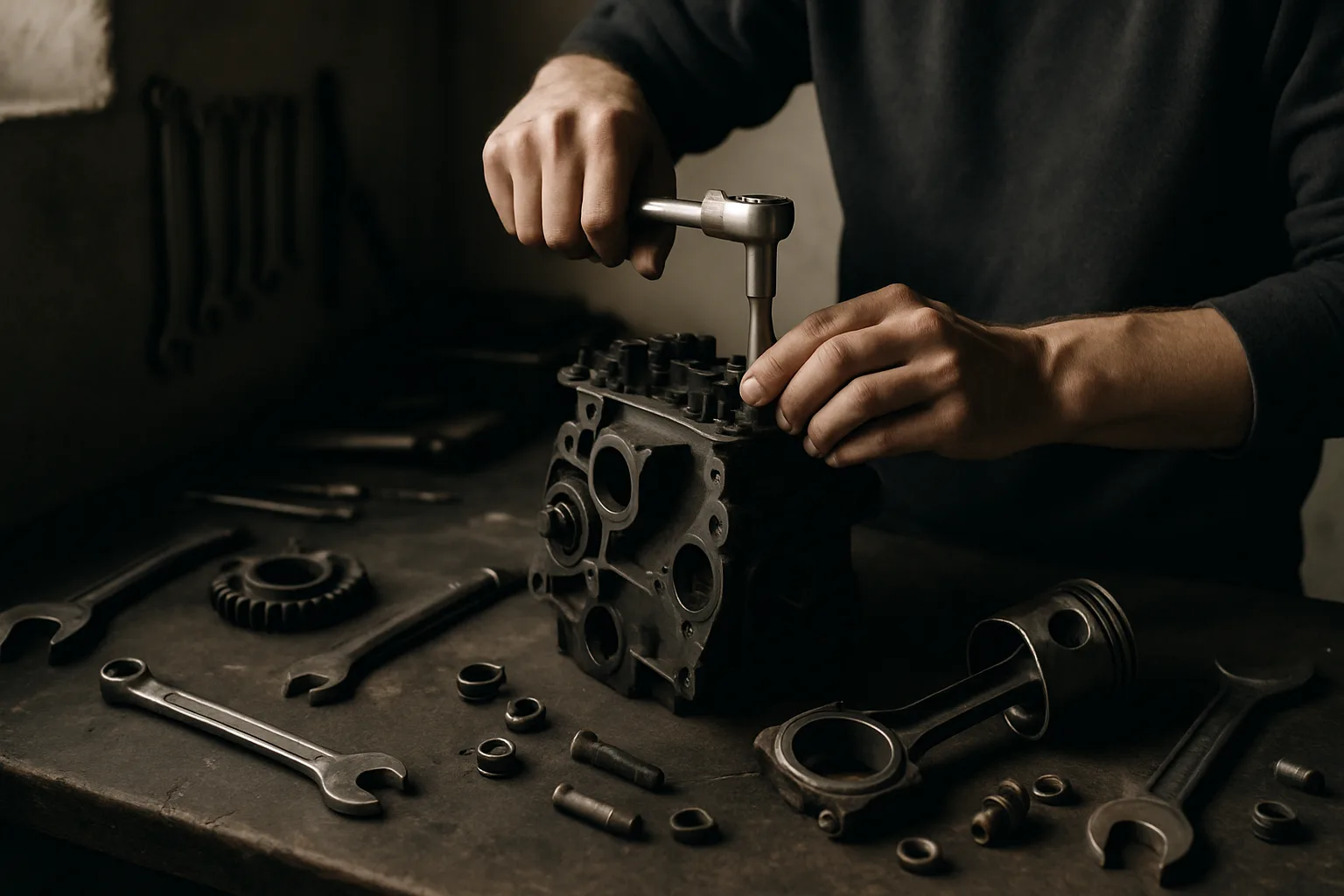
Every car person carries the same two daydreams. One is the open road, a full tank, and nowhere in particular to be. The other is dragging some tired old thing out of a barn or a back lot and bringing it back to life with your own two hands. Both dreams rest on one stubborn little idea, that the car is yours to do with as you please.
Here's the third piece, and it's the one that ought to get your blood up. Break a taillight on something old and you fix it yourself on a Sunday and think nothing of it. Break the wrong part on a new car and you turn into a problem the dashboard reports on, a risk the system flags, and a repair only the dealer is allowed to make, because the government and the major automakers are leading the charge to decide what you're even allowed to touch.
Now, I'm reasonable about most of this. I'll buy my tabs, carry my license, register the thing, and bolt a plate to it, because that's how we keep property straight and I've got no quarrel with it. The day somebody starts telling me how I can maintain my own car, where I can drive it, and how far, that's the day I put my oily boots down on the ground and dig in.
I come by this the way a lot of you do. I've wanted to be around cars as far back as I can remember, the kid who drew fenders in the margins of his homework long before he was old enough to drive one.
I run Autodyssey now, and I edit the magazine, which makes people picture my collection as a Pebble Beach lawn. It isn't. I keep a small handful of old cars, most of them worth more in stories than in dollars.
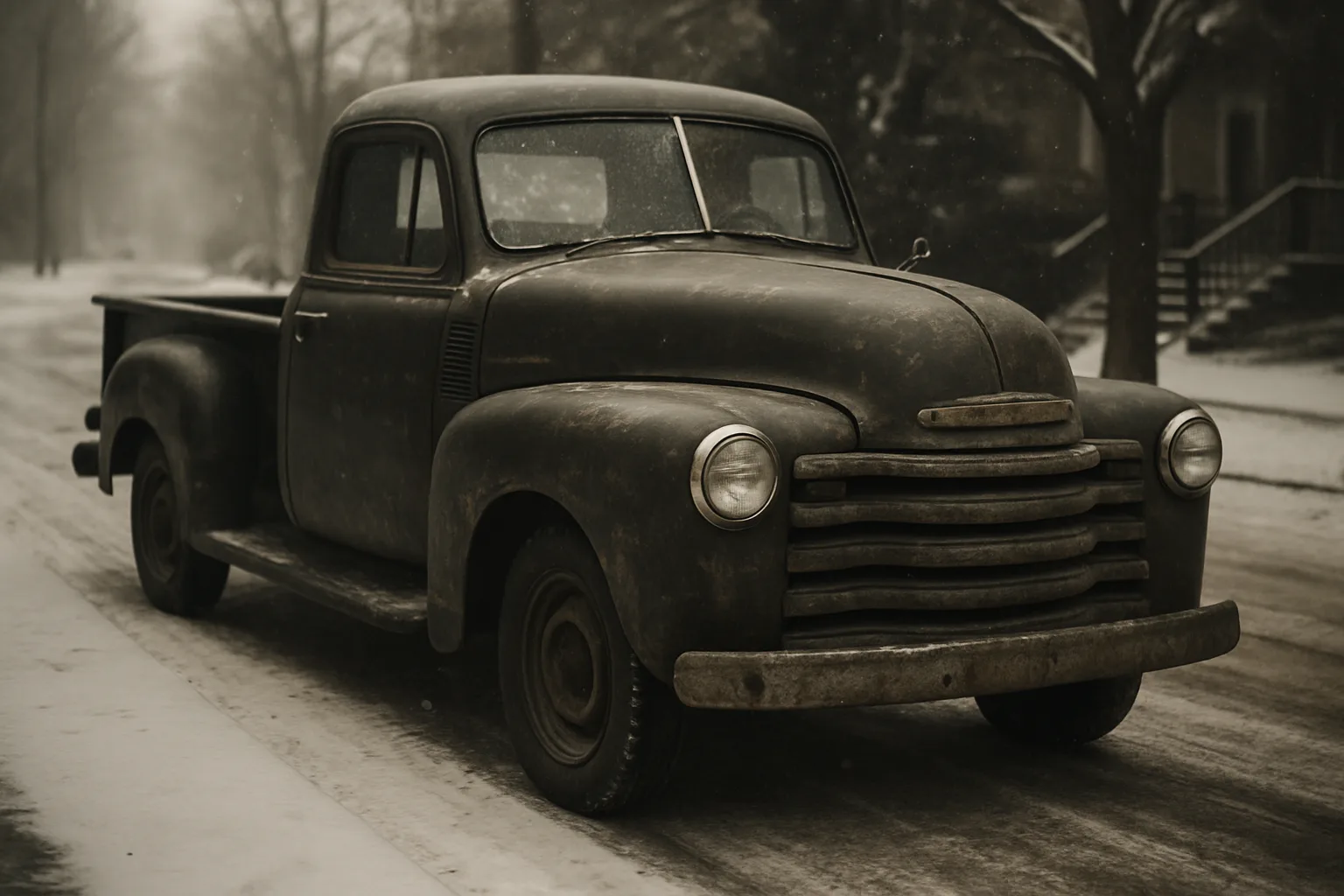
The newest thing I own is a 2007 Dodge Ram that's seen more salty roads than a pretzel. It quietly became a Bluetooth car somewhere along the way (which is the polite way of saying its panels keep getting lighter and less connected to one another every winter, because Minnesota salt and rust are notorious). The only modern fitting on it is one I put in myself, an in-dash phone charger that syncs to the radio and plays over Bluetooth, which makes it a small miracle the thing has a working radio at all. I love it without reservation.
That truck starts every morning, gets me where I'm going, and asks me for nothing in return. I can fix it myself. I can buy parts for it at any counter in America.
I can change the headlights, take the box clean off the frame if the mood strikes, pull the bumpers, and bolt the whole thing back together by dinner. It's mine, I've owned it for years, and nobody has to approve the plan.
It's worth almost nothing, which is its own kind of freedom. I park it on the street where nobody bothers it, partly because there's nothing left worth stealing. I took the catalytic converters out a while back, after thieves kept helping themselves, and now even that headache belongs to me.
That old truck is the whole argument I want to make. It belongs to me the way a thing should, and that's exactly what's slipping away from people buying new cars today.
The car that listens to someone else
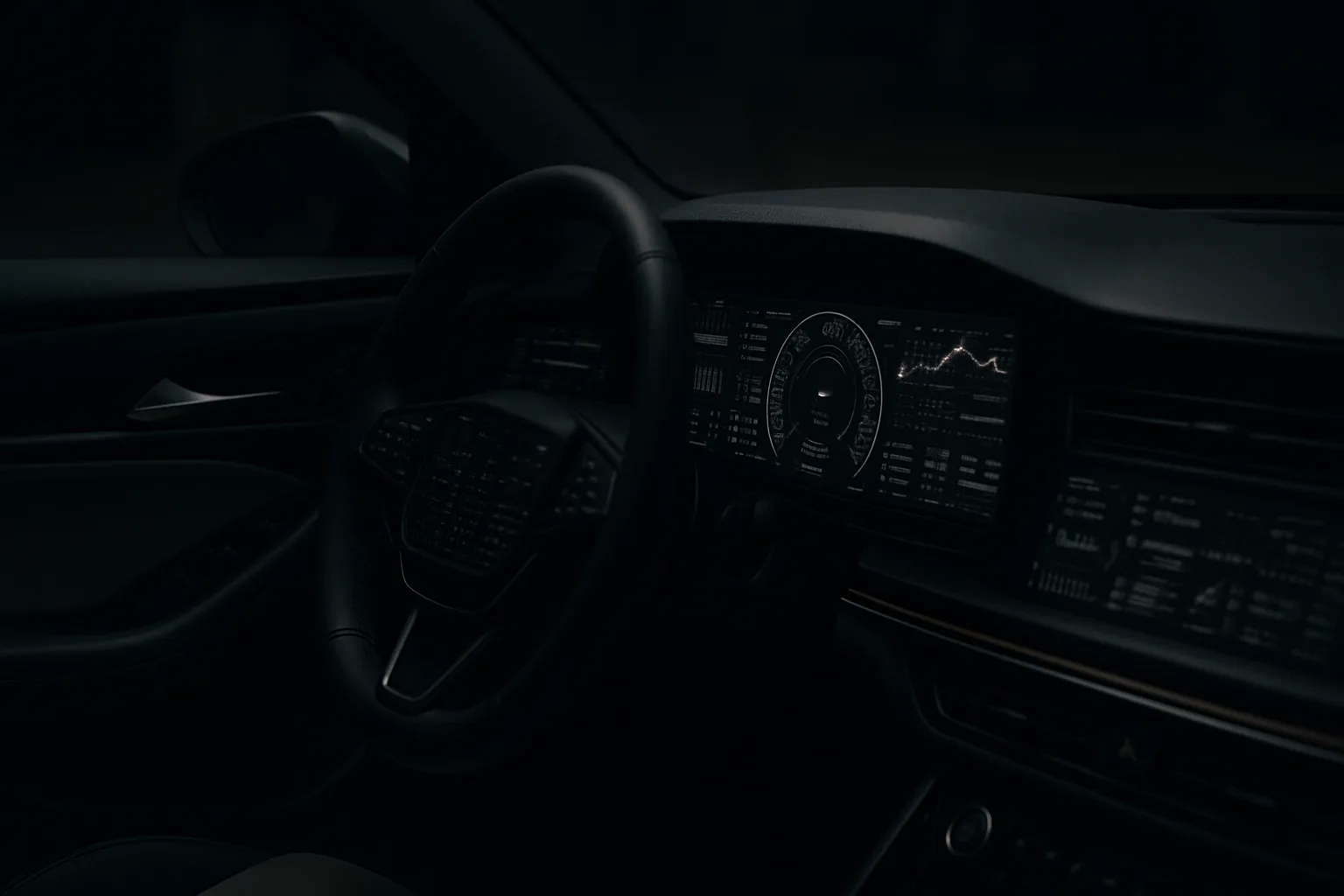
A new car is a computer you sit inside, and a computer answers to whoever writes its rules.
Ford showed how that can go. It filed a patent back in 2021, made public in 2023, for a car that could punish you for a late payment. Miss enough payments, ignore the warnings, and the system Ford described could shut off your air conditioning, kill the radio, switch off cruise control, and lock the doors. Once self-driving cars are ready, it could drive itself off to be repossessed while you stand there holding your coffee.
The patent says, in the flat language of a parking ticket, that doing this could "cause an additional level of discomfort to a driver and occupants." That's the part that gets me. They wrote the discomfort down on purpose.
Ford says it has "no plan to deploy this," and that's worth taking at its word. Big companies patent thousands of ideas they never build, and Ford even holds a patent for a conveyor belt that slides your groceries from the bed to the cab.
The repossession car might never get built. The point is that someone drew it up, because a connected car makes it possible, and possible has a way of turning into standard.
Jim Farley runs Ford, he loves cars as much as anyone reading this, and he's been clear about where the industry wants the money to come from. Farley has called connected-car services the biggest "land grab of revenue" since the Model T. He's told investors to think of the data your truck sends back as "a second F-150," a whole second business riding along in the same vehicle. He wants around twenty billion dollars a year from it by 2030.
I don't begrudge a company making money, and good software is worth paying for. The trouble starts when the thing they're charging you to switch on was already built into the car you bought.
BMW tested the water in 2022. It charged eighteen dollars a month to turn on heated seats that were already sitting in the car, and people got so angry that BMW backed off before long.
Other carmakers kept right on going. Mercedes will charge you about twelve hundred dollars a year to let its electric cars speed up faster, using power the motors already make. Tesla rents you its self-driving features by the month. Mazda has charged a monthly fee for remote start.
Ask ordinary drivers about this and about nine in ten say the same thing, that the equipment in the car should be theirs the day they pay for the car. That's the kind of common sense that apparently needs defending now.
Who gets to fix it
All of this comes back to one question. Who gets to fix your car?
New cars send a steady stream of data about themselves back to the manufacturer, and whoever controls that data controls who's allowed to work on the thing.
Voters in Massachusetts saw where this was heading. They passed a law in 2020, by a landslide, that says carmakers have to give you and your local mechanic the same access to that data the dealer gets. The carmakers sued to stop it. A federal safety agency told them in 2023 to ignore the law over hacking fears, then changed its mind. A judge cleared the law in early 2025.
The fight has spread to Congress now, with one bill written for owners and mechanics and a competing one backed by the industry. The question at the bottom of all of it never changes. Can you fix what you own?
The carmakers aren't cartoon villains, and their side deserves a fair hearing. They point to a deal they signed in 2014 and renewed in 2023 that already promises independent shops the repair information they need, and they say most repair work happens outside their dealerships anyway.
They warn about security, and they have a point, because a car you can reach from a phone is a car a thief might reach the same way. A General Motors executive told a court that building the open system the law wanted was "technically impossible."
You can hear all of that and still believe the car you paid for should answer to you.
The switch that decides for you
The government has its own version of the connected car, and this is the part I want to handle carefully.
Congress put a rule in the 2021 infrastructure law, named after a Michigan family killed by a drunk driver. It tells safety regulators to require new cars to detect a drunk or impaired driver and stop the car from being driven.
Nobody decent argues with the goal. Drunk driving kills thousands of people a year, and the families who fought for this law carry a weight I wouldn't wish on anyone. One of the lawmakers behind it calls it a life-saving switch and says the scary "kill switch" talk is overblown, and she deserves to be heard on that.
My worry is simpler, and it sits underneath the politics. A car that can decide you shouldn't be driving, and then act on it, is making that call with software, with no breath test, no officer at the window, and no clear way to tell it it's wrong when you're stuck on a freezing shoulder with a kid in the back.
The regulators themselves told Congress in early 2026 that the technology isn't ready, that the systems they've tested can't reliably tell a sober driver from a drunk one. Building something that can't yet do its job into every new car, and trusting it to get the call right, is a lot to ask on faith.
Why my old cars are next
Here's why this lands on my Ram and my old cars, and why it should land on yours.
The whole industry, the carmakers and the regulators both, is settling on one idea of what a car is. It connects, it reports, it checks its own parts, and somebody somewhere can reach it and switch it off. My truck does none of that. My truck is an engine, some wiring, and a lot of opinions, and that makes it the odd one out in a world built for the opposite.
Nobody's going to ban my Ram with a big announcement, because that would make the news and make me a martyr. It'll go the quiet way instead.
Parts get harder to find because the maker would rather sell a new truck. Insurance starts treating the car it can't monitor as a risk. Cities write parking and emissions rules around the assumption that every car phones home, and the one that doesn't gets shut out of more places every year.
The car you fully own and fully control slowly turns into the weird old thing the system doesn't know what to do with. What the system can't manage, it eventually decides you shouldn't have.
This one belongs to everybody
This is the rare fight that should put everyone on the same side of the garage, the guy with the spotless show car and the guy with the primer-gray project, the person charging an EV and the person setting the points on a distributor, and plenty of folks who'd never agree on anything else.
This is about owning your property, which is about as old and as cross-the-aisle as ideas get. You paid for the car. You should get to fix it, drive it where you want, and pass it on to whoever you choose with its whole story intact.
Anyone who's ever owned a car they could work on already feels this. They know the difference between owning a car outright and making payments on one that's still quietly keeping an eye on you.
Writing it all down is how we hold the line. A car that carries its full story, every repair, every part, every owner, and every road trip, is a car that can stand up for itself in front of a buyer, an insurer, a regulator, or a judge.
A documented car is worth more, and it's harder to push around, because its life is written down, provable, and yours.
That's what we built Autodyssey to do. The Vault keeps the record permanent and growing. The Provenance Score climbs every time you add to it. The Vehicle Passport proves the whole of it. The Ancestry ties every owner's chapter to the car's VIN so the story never breaks.
Record it, build on it, share it, and add value, and you've done more than keep a car running. You've kept it yours.
Sign the petition
We're starting a petition here at Autodyssey, and the ask is as plain as that old truck of mine.
We want the people who buy cars to keep the right to repair them, to choose who repairs them, to put the parts they want on them, and to drive them wherever they please without a computer three states away deciding today isn't a driving day.
We want a car you've paid off to answer to you. We want carmakers to win by building things people want instead of charging rent on what we already bought. And we want the old cars, the ones our parents drove and our kids might inherit, to keep their spot on the road.
Sign it. Getting in your own car and driving off to see the country is one of the best freedoms we've got, and that freedom lasts only as long as the key still turns in your hand.