
AUTODYSSEY

The Year You Were Born · Issue 1985

The cars of 1985, and the last American muscle car that meant it

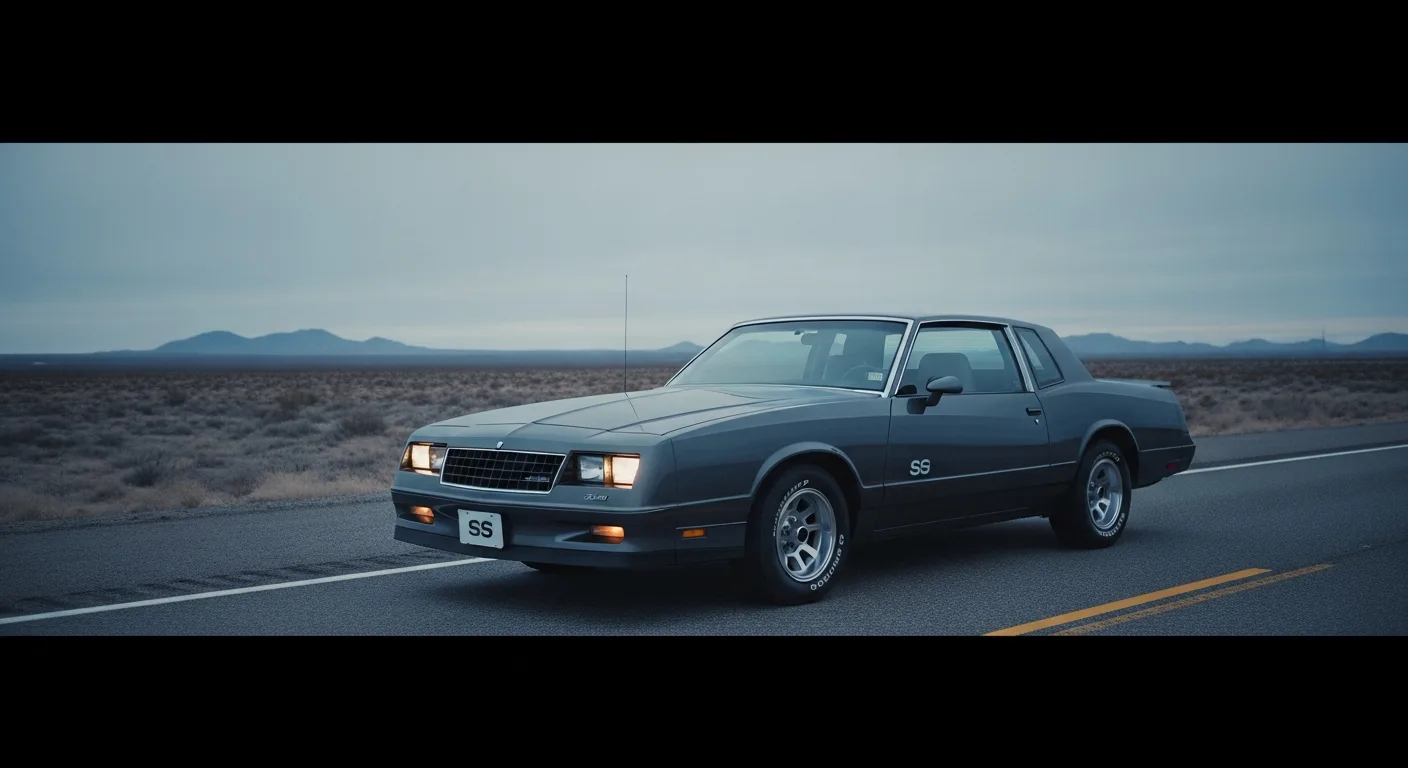
The Chevrolet Celebrity was the best-selling car in America in 1985, which tells you where the market was. In a different building at the same corporation, Chevrolet was finishing the last rear-wheel-drive Monte Carlo SS — a NASCAR homologation special with a high-output 305 and a spoiler — before the model moved to front-wheel drive and became something else entirely.

Series
The Year You Were Born
Issue
Vol 01 · 1985
Topic
Automotive Archaeology
Length
~12 min read
Start reading ↓
01 · The Year

Live Aid, New Coke, and the last of the rear-wheel-drive Chevrolets

1985 was the year of Live Aid, New Coke, Back to the Future, and the Chevrolet Celebrity, which outsold everything in America and has since been remembered by almost nobody. Reagan was in his second term. The economy was recovering from the early-decade recession. Gasoline had retreated from its 1981 peak to around $1.20 a gallon, which gave buyers permission to think about cars for reasons other than fuel economy. The Japanese manufacturers — Honda, Toyota, Nissan — were accelerating their American market penetration with cars that the domestic industry was increasingly unable to dismiss.

The American domestic car market of 1985 was in the middle of the front-wheel-drive transition, a structural change that had begun with the 1980 X-cars and would be complete by 1990 for most domestic models. Rear-wheel drive was being retired from mass-market cars to specialty vehicles — the Mustang, the Corvette, the Monte Carlo SS — which meant that the Monte Carlo SS of 1985-1987 is the last direct descendant of the rear-wheel-drive American performance coupe before that body type went away and came back different. The 1985 SS is not the most powerful or the fastest. It is the last honest one.

Average new-car price
$9,005
Gallon of gasoline
$1.20
US cars sold
11.0 million
Cultural moment
Live Aid, Back to the Future, New Coke
02 · The American Top Ten

What America bought in 1985

The 1985 American top ten is the front-drive transition in progress. The Celebrity, the Cavalier, the Escort, and the Tempo represent GM's and Ford's answers to the fuel-economy decade. The Monte Carlo SS is the holdout — the last car on the list that still thinks rear-wheel drive is a reasonable position.

01
Chevrolet Celebrity

The Celebrity was GM's front-wheel-drive mid-size family car, and it was sensible, reliable by 1985 standards, and entirely without character. It outsold everything in America in 1985 because it was a reasonable choice at a reasonable price, and most car buyers in 1985 wanted reasonable. The Celebrity is difficult to find today because the people who bought them used them until they were gone.

02
Ford Escort

The Escort continued its strong sales run, selling to the same buyers who had discovered it during the recession: people who needed reliable small-car transportation at a price the recovery made achievable. The GT version with the 1.6-litre engine was the sporting option, though sporting is a generous characterisation of what it delivered.

03
Oldsmobile Cutlass Ciera

The Ciera was the A-body front-drive Cutlass, which had replaced the classic Cutlass Supreme's platform while keeping the name. It sold in large numbers to buyers who wanted a Cutlass and were not paying attention to the platform change. The Ciera was a better car than its dismissive reputation among enthusiasts suggests, but it was not the car that the Cutlass name had implied.

04
Chevrolet Cavalier

The Cavalier was GM's front-drive compact, and it was selling in very large numbers to buyers who needed an affordable small car and trusted the Chevrolet dealer. The Z24 version had a sporty appearance that the rest of the car's specification did not support, which was the standard approach to small-car marketing in this period.

05
Ford Tempo

The Tempo was Ford's front-drive compact, positioned between the Escort and the mid-size LTD. It was a useful car that filled a useful gap in Ford's lineup and is now remembered primarily by people who owned one, which is the definition of an honest sales success.

06
Chevrolet Monte Carlo SS

The Monte Carlo SS is the most interesting car on this list and had the lowest sales volume of any car on it. A 180-horsepower 305 V8, rear-wheel drive, an aerofoil rear spoiler, and a direct connection to Chevrolet's NASCAR racing program: the SS was built to meet homologation requirements for stock car racing and sold to buyers who understood what it was. Those buyers were right.

07
Dodge Aries / Plymouth Reliant

The K-cars were three years into their production run and still selling, to the continuing relief of Chrysler's finance department. The 1985 versions were improved over the originals and represented the kind of gradual refinement that extended a product's useful life without requiring a complete redesign. Lee Iacocca understood this.

08
Ford Mustang GT

The Mustang GT with the 5.0 HO V8 was producing 210 horsepower in 1985, which was enough to make it the fastest production car available from a domestic manufacturer at its price point. The Fox-body Mustang is the performance car that the 1980s domestic market could actually afford, and its current collectibility reflects that broad ownership base.

09
Honda Accord

The Accord was climbing the sales charts in a way that the domestic manufacturers were beginning to find alarming. The 1985 Accord was available as a sedan or hatchback, had a 1.8-litre fuel-injected engine, and delivered reliability and quality that the domestic compacts could not consistently match. The buyers who switched to Honda in 1985 were, in most cases, Honda buyers for the next thirty years.

10
Toyota Camry

The first-generation Camry had launched in 1983 as Toyota's entry into the mid-size market, and by 1985 it was establishing the sales trajectory that would eventually make it the best-selling passenger car in America. The 1985 Camry was conventional, reliable, and comfortable — the same things the Celebrity was, only built to a standard the Celebrity did not achieve.

Editorial detail from 1985

Detail · 1985

03 · The Rest of the World

What the rest of the world drove

Europe in 1985 was in the middle of producing the generation of cars that would define the decade: the Peugeot 205 GTI, the Golf GTI mk2, the Audi Quattro. These were cars that took the small performance car seriously as an engineering problem, and the solutions they found are still being studied.

United KingdomFord Sierra XR4i

The Sierra had replaced the Cortina in 1982 with an aerodynamic body that British buyers found alarming and eventually accepted. The XR4i with its twin-rear-wing spoiler and 2.8-litre V6 was the performance version, and it was a genuinely effective car on a motorway in a way that its appearance promised and its dynamics delivered.

GermanyVolkswagen Golf GTI mk2

The second-generation Golf GTI arrived in 1984 and by 1985 was establishing itself as the benchmark hot hatchback. More power, more refinement, better NVH, and the same fundamental competence that the mk1 had established. The 16-valve version that arrived in 1985 took the brief seriously enough to produce 139 horsepower from 1.8 litres, which was a number that focused attention.

FrancePeugeot 205 GTI

The 205 GTI is the car that car journalists of a certain age speak of reverently and specifically. One-point-six litres, 115 horsepower, and a chassis balance that produced handling which larger, more powerful cars could not replicate on a winding road. The 205 GTI is now expensive because everyone who drove one remembers what it felt like.

ItalyFerrari Testarossa

The Testarossa launched in 1984 and by 1985 had become the definitive poster car of the decade. The flat-twelve engine, the side strakes, the wide rear haunches — the Testarossa is 1985 in automotive form, which is both a compliment and a precise description.

JapanToyota MR2

The original MR2 arrived in 1984 and by 1985 was proving that Toyota could build a mid-engine sports car that was both affordable and genuinely good to drive. The 1.6-litre twin-cam engine, the mid-engine balance, the pop-up headlamps — the AW11 MR2 is the sports car that Toyota built when it was paying attention to sports cars.

04 · Our Pick

Our pick from 1985

Chevrolet Monte Carlo SS
Why this one

The 1985 Monte Carlo SS is the last meaningful rear-wheel-drive American coupe before the format was retired from the mass market. Chevrolet built it to satisfy NASCAR homologation requirements — a specified number of street cars had to be sold to qualify the body style for competition — and the result is a car that carries a direct connection to the racing program and delivers it to buyers who could afford the thirty-seven-hundred-dollar SS package. The 180-horsepower 305 V8 is not a powerful engine by the standards of the era it references, but the chassis is sorted, the styling is clean, and the car is honest about being a rear-wheel-drive American coupe at a time when that statement required some courage.

What to watch for

Rust in the lower quarters and the rocker panels, which is the standard B-body Chevrolet failure pattern. The 1983-1988 Monte Carlo SS was built on a platform that dated from the late 1970s, which means the rust protection is from the late 1970s — adequate for the midwest in 1985, inadequate for the midwest in 2025. Engine and transmission are straightforward small-block Chevrolet: well-documented, well-supported by the aftermarket, and easy to find specialists for. The interior plastics crack and fade; replacements are available but correct originals are worth more.

What to pay in 2026

A solid driver-quality 1985-1987 Monte Carlo SS runs between twelve and twenty-two thousand dollars in 2026. A low-mileage, original-paint example commands twenty-five to thirty-five thousand dollars. The T-top option adds value and adds weather-related risk in equal measure. The Aerocoupe version, built in small numbers for aerodynamic NASCAR purposes, is significantly more expensive and significantly rarer.

For the Vault

The original window sticker if it survived — the SS package is documented on the sticker, and the presence of factory documentation distinguishes the correct car from a Monte Carlo dressed in SS trim. The service history from the dealer if the car was maintained at a dealership. Photographs of the car from the year you bought it and a continuous photographic record thereafter. The car is already a collectible; the record makes it a documented collectible, which is worth more.

05 · Closing

Why 1985 is the last year of a conversation that took forty years to resume

The American rear-wheel-drive performance coupe went away after 1987 when the Monte Carlo moved to front-wheel drive. The Mustang survived on the Fox platform. The Corvette survived on its own terms. Everything else — the Cutlass Supreme, the Grand Prix, the Monte Carlo — became front-wheel-drive cars with the same names, which is a different thing. The conversation that the rear-wheel-drive American coupe had been having about what a performance car was and who it was for went quiet and did not resume until the 2000s and 2010s brought back the Challenger, the Charger, and the new Camaro.

The 1985 Monte Carlo SS sits at the end of the original conversation, built at a moment when Chevrolet was both acknowledging the market pressure for fuel efficiency and refusing to entirely abandon the rear-wheel-drive brief. Start a Vault the week you acquire one. The car's connection to the racing program is documented in Chevrolet's own archives, and the specific car you buy has a specific story that only its records can tell.

From the editor

The car from the year you were born is the only classic that already knows your birthday. Start the Vault the week you bring it home, and forty years from now the record will be worth more than the car. Both will be priceless to whoever inherits them.

Autodyssey · The Magazine · Vol 01
1985 · The cars of 1985, and the last American muscle car that meant it · Autodyssey