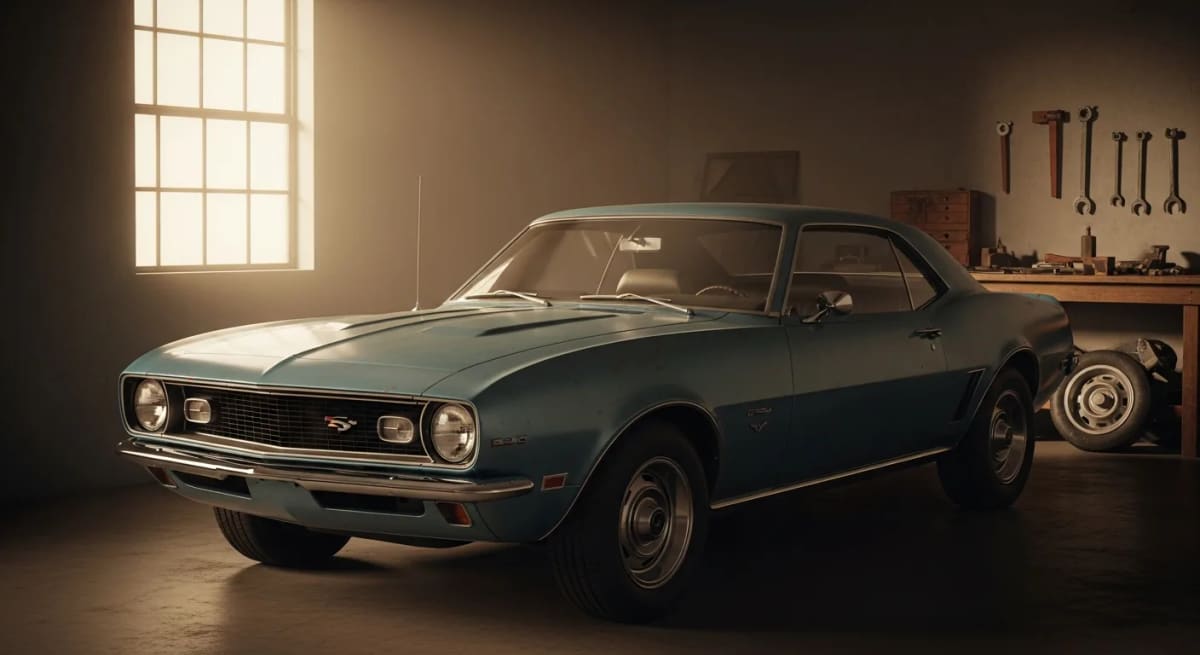

Every collector has the same story. You find the car, the seller has a folder, the folder has receipts and a clean title, and six months in you discover the rear floor pan is a beer can riveted to a ghost. The price you paid was real. The history that justified the price was a polite fiction.
That's the quiet scandal of the collector market. We trade six and seven figures on documents nobody verifies, owners nobody can find, and odometer numbers that were last accurate in 1987. Auction houses do their best with what's in front of them, marque registries do heroic work in their corners of the hobby, and the honest seller wants exactly what the honest buyer wants. None of that fixes the basic problem, which is that the car's life story lives in shoeboxes scattered across four states, two divorces, and a storage unit nobody has the key to anymore.
Provenance Is the Wrong Word
Provenance is what the auction catalogue prints. It's the curated version of a car's life, edited for the buyer's mood and the consignor's needs, mentioning the celebrity owner and quietly omitting the year the car sat outside under a tarp, citing the concours award and forgetting the small fire in 2004. Provenance is marketing.
Transparency is the unedited file, every receipt, every photo of the engine bay before the rebuild, every shop ticket that says "owner declined" next to the line item for brake hoses. It includes the boring parts. It includes the parts the current owner would rather you didn't see, because the current owner didn't write them and can't delete them.
These are different products. The hobby has been buying the first one and pretending it was the second, and we think that has to stop.
What the Vault Is For
The Vault is our answer, seven surfaces keyed to a VIN: Records, Projects, Parts, Documents, Photos, Feed, Lineage. Everything that happens to a car gets logged against the VIN, everything stays, and nothing can be quietly removed when the car changes hands, because the chain of ownership is itself part of the record.
That last piece is the one that matters, and it's the one nobody else has built. Lineage is the spine. Every record carries a tenure ID, every tenure belongs to one owner's chapter of the car's life, and when the car sells the next owner inherits the whole book. The 1974 receipts from the second owner sit next to the 2018 dyno sheet from the fifth, alongside the 2026 oil change from you. Future you, selling the car in 2034, hands the buyer a complete file. The buyer doesn't have to trust your story. The story is already there, in the car's own words.
The Cost of Honesty
There's a real cost to this, and the cost is borne by sellers who have something to hide. A Vault-backed car that's been hit and properly repaired will sell for less than a non-Vault car the seller claims has never been hit. We know. We're fine with it. The market that rewards omission is the market that produces the beer-can floor pan, and the people who lose in that market are buyers, restorers, and eventually the cars themselves when the rust nobody disclosed becomes the structural failure nobody can fix.
The Vault rewards the opposite behaviour. Sellers who log the accident, attach the body shop photos, and show the corrosion treatment are offering buyers something rare and worth paying for, which is a car with no surprises. We think the market sorts itself over time. Honest cars trade at a premium. Quiet cars trade at a discount. Anyone who's ever been burned will tell you which side of that trade they want to be on.
Trust Is a System, Not a Vibe
You cannot trust your way out of a structural problem. The collector hobby has been trying for forty years and the same scandals keep happening with new names attached. Trust at scale is built by systems that make dishonesty inconvenient and honesty cheap, by append-only logs, multi-owner records, and photographs with timestamps the seller can't change. That's what the Vault is, and that's why we built it the way we did before we built anything else on top of it.
Some of you have asked whether this is overkill for a hobby that's supposed to be fun. We hear the question. The honest answer is that the hobby gets more fun when you can buy a car without spending a year reconstructing its real history from forum posts and gut feelings. The fun is on the other side of the paperwork, and you get there by going through it.
We'll tell you what works and what doesn't as we go. We'll publish the things we get wrong, including this article if it ages badly. The Vault is our promise that the platform you're reading this on holds itself to the same standard it's asking of every car that lives inside it.