
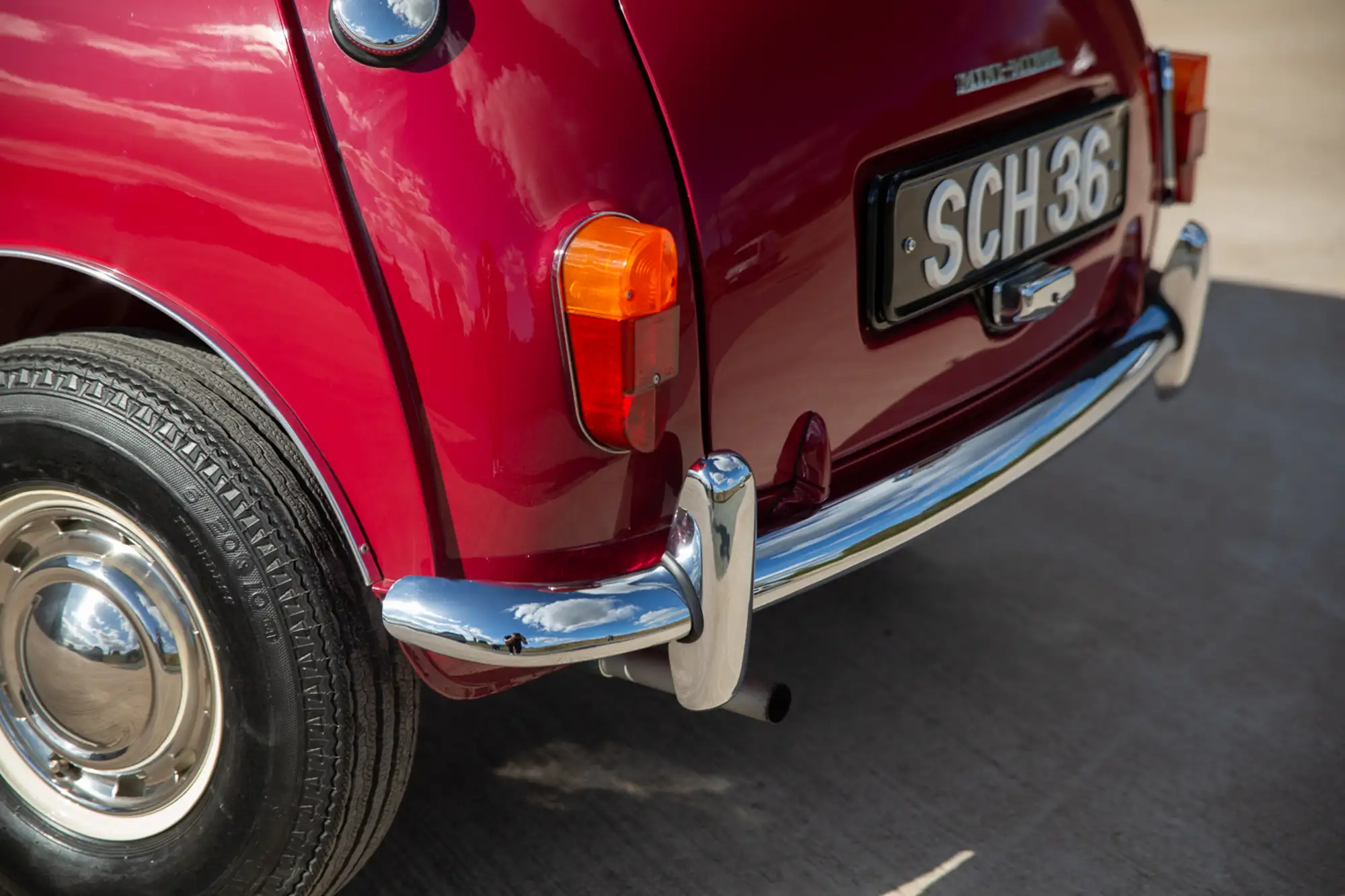
1959 · Morris
Mini-Minor
Ten feet long, four real seats, and a transverse engine that changed the world.
The Suez Crisis of 1956 spiked the price of petrol across Europe and put British Motor Corporation under pressure to build a small, efficient car. Alec Issigonis was given a clean sheet and one constraint: keep it under ten feet long, with room for four adults and luggage.
His solution rewrote the rulebook. Turn the engine sideways. Drive the front wheels. Mount the gearbox in the engine's own oil sump to save space. Push the wheels to the absolute corners of the body. The result was a car that gave eighty percent of its floor space to passengers and luggage, a ratio no rear-drive sedan could touch.
The Mini was launched in August 1959 at a price (£497) calculated to undercut every other small car on the market. It immediately did. By the early 1960s it had become the unofficial city car of Britain, the rally weapon of Paddy Hopkirk, and the prop car of every kitchen-sink film and Italian Job sequel that followed.
Why it matters
- First mass-produced car with a transverse front engine and front-wheel drive, the layout used by nearly every small car built since.
- Won the Monte Carlo Rally three times in the 1960s against cars several classes larger.
- Stayed in continuous production, with the same basic body, for 41 years.
Photo · Silverstone Auctions
Next in the collection

1957 · Chevrolet