
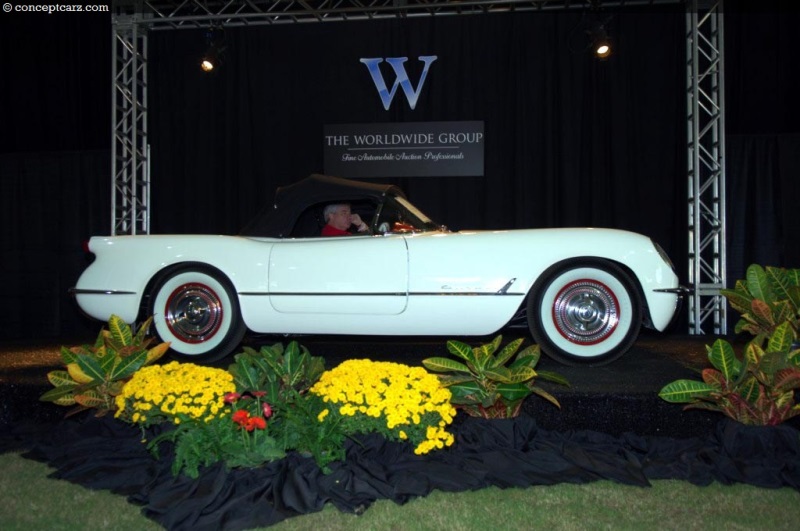
1953 · Chevrolet
Corvette (C1)
America's first true sports car. Fiberglass, six cylinders, all guts.
The 1953 Corvette was a concept car that escaped. Harley Earl had styled it for the Motorama show circuit and the public response was loud enough that GM scrambled it into production six months later, in a temporary line at Flint, Michigan. Every one of the 300 first-year cars was hand-laid fiberglass, Polo White over Sportsman Red, with a Blue Flame inline-six borrowed from the Bel Air sedan.
Critics were not kind. The two-speed Powerglide automatic and the 150-horsepower six made the Corvette quicker than most sedans but slower than the European sports cars it was meant to challenge. Sales nearly cratered. Zora Arkus-Duntov, a Belgian-born engineer hired in 1953, spent the rest of the decade fixing what was broken.
What the 1953 Corvette got right was the silhouette. Long hood, short deck, two seats, a wraparound windshield, and the unshakable American conviction that a sports car should look like the future was still ahead of it. Seven generations later, the Corvette is still in production, still front-engine in spirit, and still descended directly from those 300 Polo White cars.
Why it matters
- First American production sports car, hand-built at a temporary Flint, Michigan line.
- First production car with a fiberglass body, a material chosen because steel tooling was too expensive for a 300-car run.
- Founded the only American sports car nameplate to remain in continuous production for over 70 years.
Photo · ConceptCarz, Hershey Collection
Next in the collection

1955 · Ford